Abstract
In this guide, we explore the technical features, production processes, and practical applications of coarse-knit woolen textiles in garment manufacturing. For textile buyers and manufacturers, understanding material selection, quality standards, and optimal uses is key to creating high-quality sweaters and coats. The Hongyang Solid Color Coarse-Knit Woolen Fabric stands out as a versatile and durable choice, perfectly suited for mid-to-premium garments. By grasping the interplay between yarn types, knitting patterns, and finishing techniques, buyers can make smarter procurement decisions that improve efficiency, control costs, and deliver garments that perform and appeal in competitive markets.
Understanding Coarse-Knit Woolen Fabric Construction
Knitting Structure and Yarn Specifications
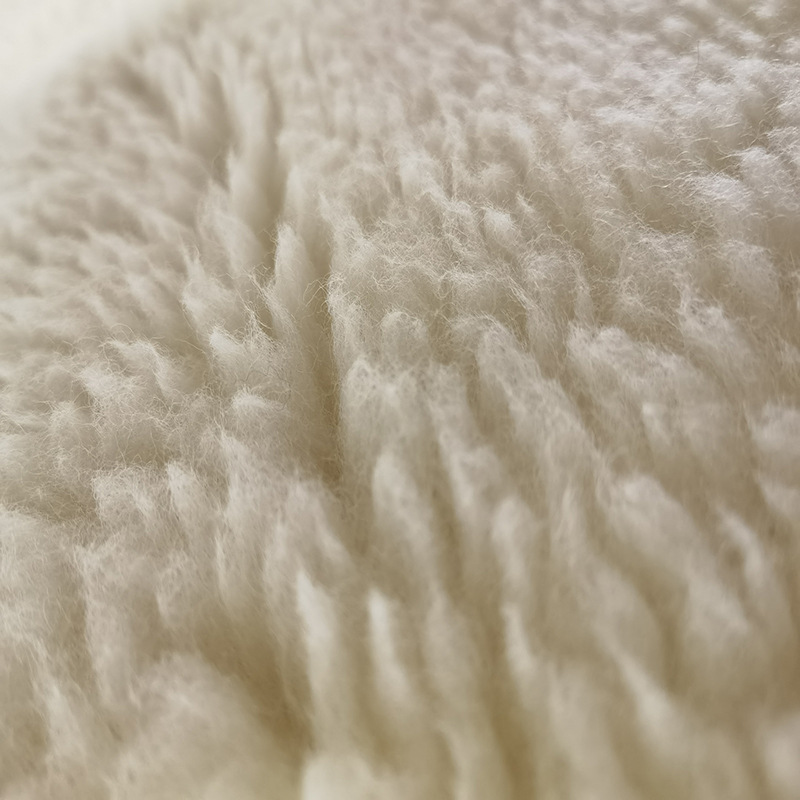
Coarse-knit woolen fabrics utilize gauge measurements typically ranging from 3 to 7 needles per inch, creating the characteristic open-loop structure that differentiates them from fine-gauge alternatives. This construction method directly influences fabric hand-feel, thermal properties, and visual texture. Yarn count in the Nm (metric) system for coarse-knit applications generally falls between Nm 2/26 and Nm 2/48, with lower numbers indicating thicker yarns that produce more pronounced surface relief.
The twist factor—calculated as the ratio of twist per meter to the square root of yarn count—critically affects both fabric stability and tactile qualities. Lower twist factors (3.5-4.2) yield softer, more pliable fabrics suitable for draped garments, while higher values (4.5-5.0) increase dimensional stability necessary for structured coats. Hongyang’s manufacturing process calibrates twist parameters to balance anti-pilling performance with the desired hand-feel, typically maintaining a twist multiplier of 4.0-4.3 for sweater-grade applications.
Loop length in coarse-knit construction ranges from 8-12mm, determining fabric density and air permeability. Shorter loop lengths create tighter fabrics with superior shape retention, while longer loops enhance breathability and reduce fabric weight per square meter. This parameter directly correlates with yarn consumption rates—a critical factor in cost calculation where each 1mm increase in loop length reduces material usage by approximately 8-12%.
Jacquard Integration in Solid Color Fabrics
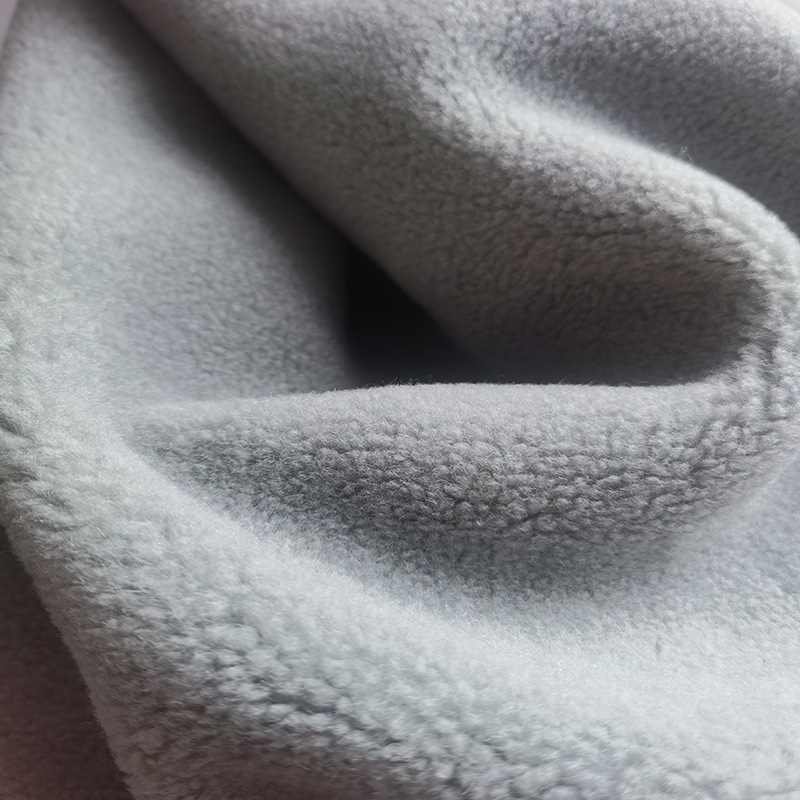
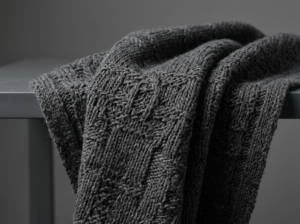
Textural jacquard patterns in woolen fabrics create depth perception through structural variation rather than color contrast. Single-bed jacquard machines produce relief patterns by selectively knitting or tucking stitches, creating raised and recessed areas that catch light differently. Double-bed jacquard systems enable more complex three-dimensional textures, including blister effects and honeycomb structures, while maintaining fabric integrity on both faces. The Solid Color Coarse-Knit Woolen Fabric produced through these methods achieves visual complexity without relying on multiple dye lots.
The machinery requirements for jacquard integration involve electronic pattern control systems capable of managing individual needle selection across 18-32 gauge positions. Hongyang’s production utilizes computerized flat-bed knitting machines with pattern repeat capacities of 200-600 stitches, allowing subtle geometric or organic textures within the monochrome palette. These patterns serve functional purposes beyond aesthetics—strategically placed textural zones enhance abrasion resistance in high-wear areas like elbows and shoulders.
Pattern depth in solid color jacquard typically ranges from 2-5mm, measured from the base fabric plane to the peak of raised elements. Deeper reliefs create more dramatic visual interest but require careful consideration of yarn tension management to prevent distortion during finishing processes. The optimal depth for garment applications balances visual impact with manufacturing consistency, generally maintained at 3-3.5mm for sweaters and 4-4.5mm for coat-weight Solid Color Coarse-Knit Woolen Fabric options.
Technical Parameters and Quality Standards
Physical Properties for Garment Applications
Fabric weight classification directly determines end-use suitability in garment manufacturing. Light-weight coarse-knit woolens (200-300 g/m²) serve transitional season sweaters and layering pieces, offering breathability while maintaining thermal comfort. Medium-weight variants (300-450 g/m²) represent the most versatile category, suitable for standalone sweaters, cardigans, and lightweight jackets across autumn and spring seasons. Heavy-weight Solid Color Coarse-Knit Woolen Fabric (450-650 g/m²) provides the structural integrity required for winter coats and outerwear, with enhanced wind resistance and insulation properties.
Thickness tolerance standards for commercial-grade woolen fabrics maintain ±0.3mm variance across production runs, measured according to ASTM D1777 protocols using precision thickness gauges at 2 kPa pressure. This consistency ensures predictable behavior during cutting and sewing operations, reducing material waste from pattern misalignment. Hongyang’s quality control systems implement continuous monitoring at 5-meter intervals, with automated rejection of fabric sections exceeding tolerance thresholds.
Dimensional stability after washing represents a critical specification for garment manufacturers, typically expressed as shrinkage percentage in both warp and weft directions. Premium coarse-knit woolens achieve ≤3% shrinkage after three standard wash cycles (ISO 6330 procedure), though relaxation shrinkage of 5-8% is acceptable for budget-tier products with appropriate pre-shrinking recommendations. Pilling resistance grading follows ISO 12945-2 methodology, with Grade 3-4 (moderate to slight pilling) considered acceptable for sweater applications and Grade 4-5 (slight to no pilling) required for coat-weight Solid Color Coarse-Knit Woolen Fabric subjected to prolonged friction.
Compliance and Testing Protocols
Oeko-Tex Standard 100 certification ensures the absence of harmful substances across four product classes, with Class II (direct skin contact) most relevant for sweater applications and Class IV (decorative materials) applicable for coat outer shells. This certification encompasses restricted amine content, formaldehyde levels below 75 ppm, and heavy metal compliance within specified limits. Textile buyers should verify certification scope—whether applied to raw yarn, greige fabric, or finished dyed product—as this affects supply chain flexibility for custom color development.
Colorfastness testing protocols include ISO 105-C06 (washing fastness), ISO 105-B02 (light fastness), and ISO 105-X12 (rubbing fastness). Commercial-grade Solid Color Coarse-Knit Woolen Fabric should achieve minimum Grade 4 for washing and rubbing, with Grade 5-6 for light fastness to prevent color degradation during retail display and consumer use. Hongyang’s dyeing processes utilize chrome-free reactive dyes with fixation rates exceeding 92%, minimizing environmental impact while maintaining superior color retention.
2.3 Comparative Technical Parameters
| Fabric Weight | Recommended Garment Type | Seasonal Suitability | Minimum Order Quantity | Pilling Grade |
|---|---|---|---|---|
| 200-300 g/m² | Lightweight sweaters, cardigans | Spring/Fall transition | 500-800 meters | 3-4 |
| 300-450 g/m² | Standard sweaters, pullovers | Autumn/Early winter | 800-1200 meters | 4 |
| 450-650 g/m² | Winter coats, structured outerwear | Winter/Cold climates | 1000-1500 meters | 4-5 |
Manufacturing Applications and Design Considerations
Sweater Production Requirements
Rib and hem compatibility in coarse-knit sweater construction requires matching gauge and elasticity characteristics between body fabric and trim elements. Standard rib configurations (1×1, 2×2) utilize 20-30% finer yarn counts than body fabric to achieve proper compression without excessive bulk. The transition zone between rib and body fabric demands gradual gauge adjustment over 3-5 courses to prevent visible demarcation lines and structural weak points.
Sleeve construction flexibility varies significantly between cut-and-sew and fully-fashioned manufacturing approaches. Cut-and-sew methods offer design freedom for complex sleeve shapes and pattern placements, but generate 12-18% material waste from cutting operations. Fully-fashioned techniques knit sleeves to near-net shape, reducing waste to 3-5% while limiting design options to geometries compatible with flatbed knitting machine capabilities. Hongyang’s Solid Color Coarse-Knit Woolen Fabric specifications accommodate both methods, with enhanced edge stability (through tighter selvage construction) for cut-and-sew applications.
Seam strength requirements for sweater assembly depend on stitch type and seam location. Shoulder seams subjected to hanger stress require a minimum 15N/cm tensile strength, achievable through 504 or 516 overedge stitches using polyester or nylon sewing threads. Side seams and armhole attachments perform adequately at 10-12 N/cm, allowing standard 401 lockstitch construction. Fabric loop strength (ISO 13936-3) should exceed 200N to prevent seam slippage during normal wear and laundering cycles.
Coat Fabrication Suitability
Lining attachment methods in coat manufacturing include traditional bagging, where the lining is sewn separately and attached at facings and hems, and hybrid construction combining fused and floating lining sections. Coarse-knit woolens with 450+ g/m² weight support both approaches, though the fabric’s inherent stretch requires fusible interlinings with compatible elongation properties (15-20% in weft direction) to prevent puckering. Woven fusible interlinings rated for wool applications (dot-pattern polyamide adhesives with 130-140°C activation temperature) provide optimal bonding without compromising the hand-feel of the Solid Color Coarse-Knit Woolen Fabric shell.
Interlining compatibility extends beyond fusible applications to include weft-insertion warp-knit interlinings that enhance wind resistance while maintaining breathability. These technical interlinings, typically 60-80 g/m², bond mechanically through quilting or channel stitching rather than adhesive fusion, preserving the wool fabric’s natural drape characteristics. The combination of coarse-knit outer shell and weft-insertion interlining achieves air permeability reduction of 40-55% while adding only 80-100 g/m² to total garment weight.
Drape versus structure balance in outerwear applications requires careful consideration of fabric stiffness and bending modulus. Solid Color Coarse-Knit Woolen Fabric exhibits lower bending rigidity (0.08-0.15 N·cm²/cm) compared to woven alternatives, creating softer silhouettes suitable for unstructured or deconstructed coat designs. When structured shapes are desired, strategic placement of fusible canvas in chest and shoulder areas increases local stiffness without compromising overall garment comfort. This hybrid approach enables coat designs that maintain professional appearance while offering superior wearing ease compared to fully canvassed woven constructions.
Sourcing and Commercial Value Analysis
Supply Chain Factors for Textile Buyers
Lead time variations between stock-supported solid colors and custom dye lots significantly impact production planning. Standard colors (navy, black, charcoal, camel) maintained in greige inventory typically ship within 7-10 days post-dyeing, with batch sizes from 500 meters. Custom color development extends lead times to 25-35 days, encompassing lab dip approval (5-7 days), strike-off production (3-5 days), and bulk dyeing with quality verification (15-20 days). Buyers should account for an additional 3-5 days for color variation between dye lots when planning multi-shipment orders of Solid Color Coarse-Knit Woolen Fabric.
Minimum order quantity negotiation strategies hinge on understanding fixed versus variable cost structures in wool fabric production. Setup costs for jacquard pattern programming, machine configuration, and dye kitchen preparation represent 15-20% of the total production cost for initial 1000-meter runs. Volume commitments exceeding 2500 meters enable MOQ reduction negotiations, as amortized setup costs decrease to 6-8% of total value. Seasonal ordering patterns also influence MOQ flexibility—manufacturers offer reduced minimums during off-peak periods (March-May, September-November) to maintain production continuity.
Price correlation with wool grade follows predictable patterns based on fiber diameter and origin. Merino wool (18-22 microns) commands a 40-60% premium over crossbred wool (25-32 microns) due to superior softness and reduced pilling propensity. However, for coarse-knit applications where texture dominates hand-feel perception, mid-grade crossbred wool (23-25 microns) offers optimal cost-performance balance, achieving 85-90% of merino’s tactile quality at 60-65% of the price point. Blended constructions incorporating 20-30% synthetic fibers (polyamide or acrylic) reduce costs by 25-35% while enhancing the durability and dimensional stability of the resulting Solid Color Coarse-Knit Woolen Fabric.
Cost-Benefit in Garment Manufacturing
Fabric utilization rates in sweater and coat production directly impact per-unit material costs and environmental footprint. Standard sweater patterns achieve 75-82% utilization with cut-and-sew methods, leaving 18-25% as trim waste. Fully-fashioned knitting improves utilization to 92-95% but requires fabric specifically engineered for this application, potentially increasing base material cost by 12-18%. For coat manufacturing, utilization rates of 70-75% are typical due to complex pattern shapes and matching requirements, making fabric cost per garment 30-40% higher than sweater applications despite similar base fabric prices.
Labor cost per unit varies significantly between knitting and weaving alternatives for comparable fabric weights and appearances. Coarse-knit woolen production requires 0.8-1.2 labor hours per meter on computerized flat-bed machines, compared to 0.4-0.6 hours for woven alternatives on rapier or air-jet looms. However, the three-dimensional structure of knitted fabrics reduces garment assembly time by 15-20% through superior drape and reduced seam puckering, partially offsetting higher fabric production costs. Total landed cost analysis should incorporate these downstream assembly efficiencies when comparing material options such as Solid Color Coarse-Knit Woolen Fabric against alternative textiles.
End-product positioning strategies determine optimal fabric specification selection within the coarse-knit category. Mid-range sweater brands targeting $80-150 retail price points typically specify 300-380 g/m² fabrics with Grade 3-4 pilling resistance and standard color palettes, achieving 45-55% gross margins. Premium positioning ($200-400 retail) demands 350-450 g/m² merino-blend fabrics with Grade 4-5 pilling performance and custom color development, supporting 55-65% margins despite 30-40% higher material costs. This margin structure reflects consumer willingness to pay premium prices for superior hand-feel and durability perception in higher-weight, finer-fiber constructions.
FAQ
Q1: What is the optimal fabric weight for transitional season sweaters versus winter coats?
Transitional season sweaters perform optimally in the 280-350 g/m² range, providing adequate warmth for 10-18°C ambient temperatures while maintaining breathability during indoor wear. This weight category allows layering over shirts without excessive bulk, with fabric thickness of 2.5-3.2mm, enabling comfortable movement. Winter coats require 450-600 g/m² fabrics to provide sufficient insulation and wind resistance for sub-10°C conditions, with a thickness of 4.0-5.5mm creating the structured appearance expected in outerwear. The weight differential reflects not only thermal performance requirements but also consumer perception—heavier fabrics signal quality and value in coat categories, while excessive weight in sweaters creates wearing discomfort.
Q2: How does jacquard texture affect the durability of woolen fabrics in high-wear areas?
Jacquard textures strategically placed in the elbow, cuff, and shoulder zones can enhance abrasion resistance by 20-30% compared to plain knit structures. The three-dimensional relief created by tuck or float stitches distributes friction forces across a larger surface area, reducing fiber damage at individual contact points. However, excessive pattern depth (>5mm) creates catch points that accelerate snagging in structured garments with linings. Optimal durability enhancement occurs with 3-4mm relief patterns using reinforced stitching in high-wear zones, balancing aesthetic appeal with functional longevity. Testing according to the Martindale method (ISO 12947) shows textured zones achieving 35,000-45,000 rub cycles before visible wear versus 25,000-30,000 for plain areas in equivalent yarn specifications.
Q3: What are the minimum order quantities for custom solid color dyeing in coarse-knit wool fabrics?
Custom color development MOQs typically start at 800-1000 meters for single-color orders, reflecting dye kitchen batch economics and color consistency requirements. This quantity allows for lab dip development, strike-off approval, and bulk production with sufficient volume to achieve color uniformity across the run. Buyers ordering multiple colorways simultaneously can negotiate reduced per-color MOQs (500-600 meters each) when total order volume exceeds 2500 meters, as setup costs amortize across the combined production. Pantone or custom color matching adds 8-12% to base fabric pricing versus standard color selection, with tighter tolerance specifications (ΔE<1.0) commanding an additional 5-8% premium for enhanced quality control protocols.
Conclusion
Coarse-knit woolen textiles in solid colorways offer versatile solutions for sweater and coat manufacturers seeking a balance between aesthetic simplicity and functional performance. Strategic selection based on weight specifications, compliance standards, and production methods ensures optimal cost-efficiency and end-product quality in competitive textile markets. The Hongyang Solid Color Jacquard Coarse-Knit Woolen Fabric exemplifies this category’s commercial value through an engineered balance of yarn specifications, knitting architecture, and finishing quality that addresses diverse garment manufacturing requirements.
Textile buyers must evaluate Solid Color Coarse-Knit Woolen Fabric options holistically, considering not only base material costs but also downstream manufacturing efficiencies, end-product positioning, and supply chain reliability. The technical parameters detailed throughout this guide—from gauge measurements and pilling resistance to dimensional stability and colorfastness—provide objective criteria for specification development and supplier evaluation. As consumer demand for sustainable, durable apparel continues growing, the inherent longevity and natural fiber composition of coarse-knit woolens position them favorably against synthetic alternatives in premium market segments.