Abstract
This pillar content explains the technical characteristics and benefits of cartoon print polar fleece fabric with face-framing. This article is addressed to apparel manufacturers, clothing buyers, and children’s clothing brands. It describes the materials, printing techniques, safety standards, and marketing strategies for procuring high-quality polar fleece fabrics that are appropriate for kids’ clothing. The face-framing design is a new technique in children’s fashion and combines print placement with thermal properties to produce garments that appeal to both parents looking for warmth and children looking at what they are wearing.
What is Polar Fleece Fabric and Why It Dominates the Kids’ Clothing Market
Material Composition and Thermal Performance
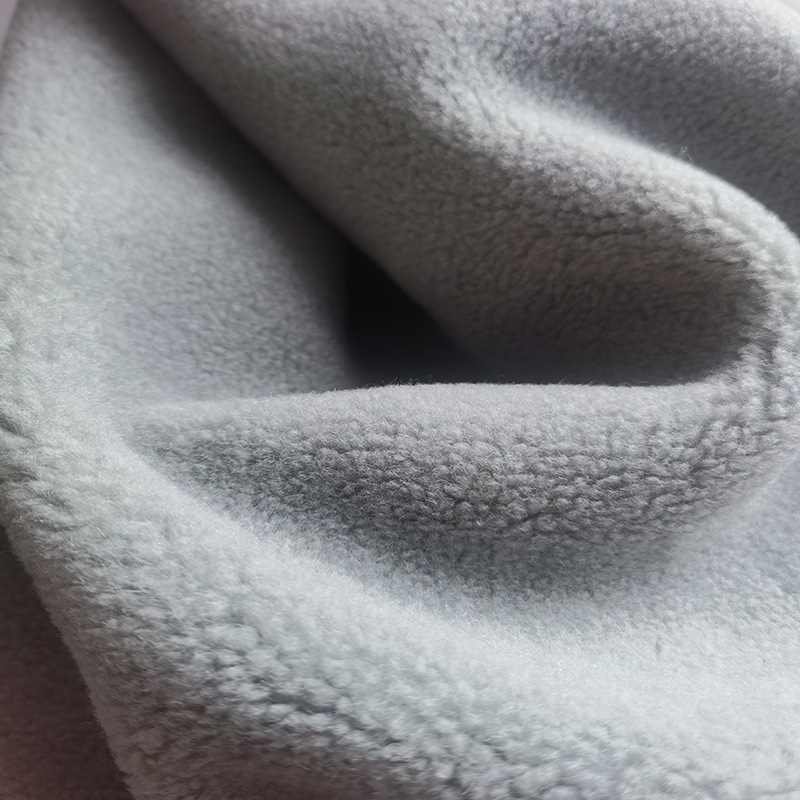
Cartoon Print Polar Fleece Fabric begins with a synthetic textile constructed from 100% polyester fibers, engineered through a knitting process that creates a dense pile structure on one or both sides. The fabric’s thermal efficiency stems from its unique construction: microscopic air pockets trapped within the polyester fibers provide insulation without excessive weight. For children’s clothing applications, manufacturers typically specify GSM (grams per square meter) values ranging from 180 GSM for lightweight layering pieces to 320 GSM for heavy-duty winter outerwear.
The moisture-wicking properties of cartoon print polar fleece fabric are particularly critical for active children. Polyester’s hydrophobic nature allows the fabric to transport perspiration away from the skin through capillary action, with evaporation rates 30-40% faster than cotton equivalents. This characteristic prevents the clammy discomfort that often causes children to reject winter garments. Laboratory testing demonstrates that 260 GSM polar fleece maintains a CLO value (thermal insulation measurement) of approximately 1.8, equivalent to a medium-weight wool sweater but at one-third the weight.
The polyester construction also delivers exceptional dimensional stability. Quality cartoon print polar fleece fabric exhibits shrinkage rates below 3% after standard washing protocols (40°C, tumble dry medium), a critical specification for children’s garments that undergo frequent laundering. The fabric’s pill resistance, when properly manufactured with anti-pilling treatments, achieves Grade 4 or higher on the ICI pilling test, ensuring garments maintain their aesthetic appeal through 50+ wash cycles.
Face-Framing Design Technology in Textile Printing
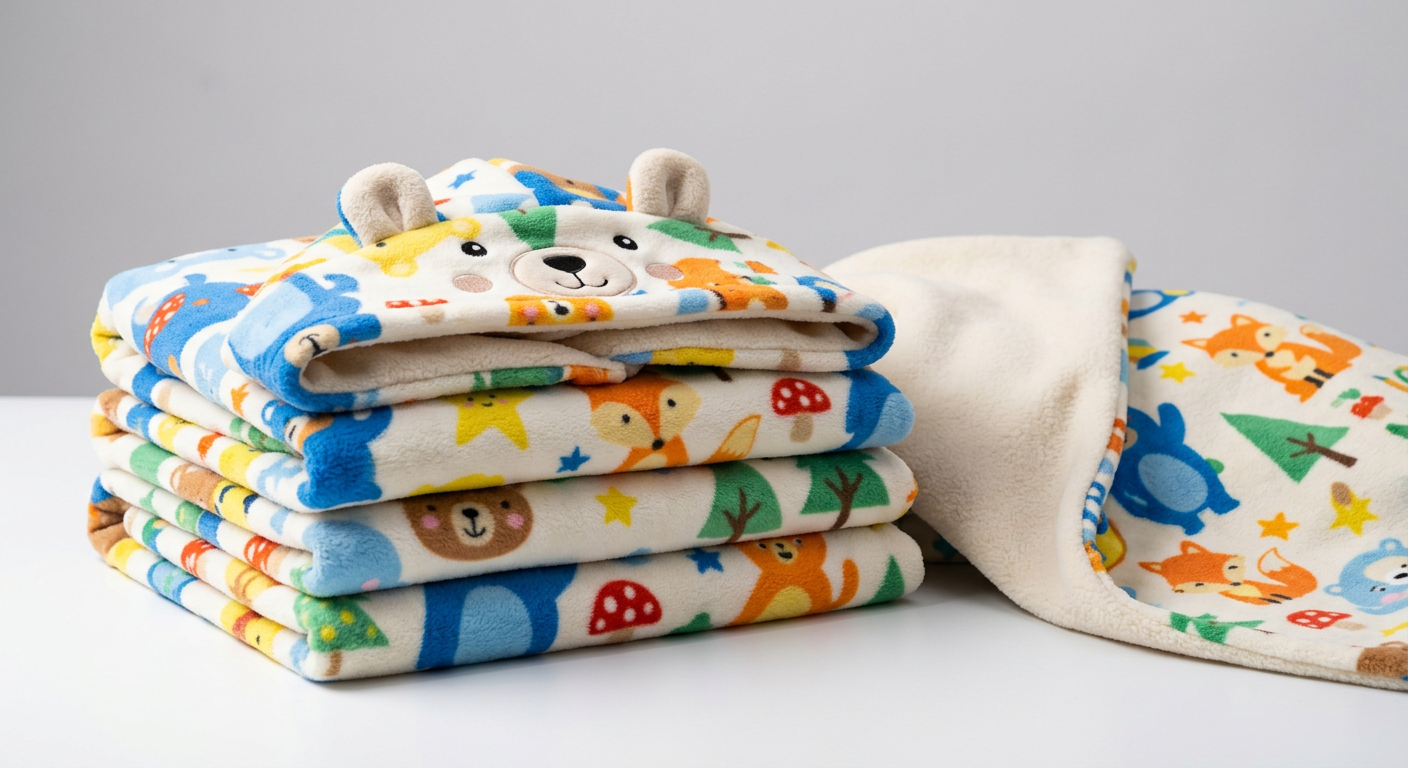
Face-framing design represents a specialized printing approach where cartoon characters or graphic elements are strategically positioned to align with the wearer’s facial features when the garment is worn. This technique transforms standard apparel into interactive play pieces—a hoodie with a lion’s mane framing the child’s face, or a jacket with dinosaur scales positioned to create a costume effect. When combined with cartoon print polar fleece fabric, the result is a garment that delivers both thermal comfort and engaging visual storytelling.
Two primary printing technologies dominate this application space:
Sublimation Printing: This process uses heat to transfer dye directly into polyester fibers, creating permanent, photo-quality images that won’t crack, peel, or fade. Sublimation achieves color fastness ratings of Grade 4-5 (ISO 105-C06 standard), meaning colors remain vibrant through commercial washing cycles. The technique allows for unlimited color variations and photorealistic gradients, ideal for detailed cartoon character reproduction on cartoon print polar fleece fabric. However, sublimation requires white or light-colored base fabrics and minimum order quantities typically starting at 500 meters per colorway due to setup costs.
Rotary Screen Printing: This traditional method applies pigment-based or reactive dyes through cylindrical screens, offering lower per-unit costs for large production runs (5,000+ meters). Modern rotary systems achieve registration accuracy within ±2mm, sufficient for face-framing designs where precise placement is critical. Color fastness typically reaches Grade 4, with proper curing processes. Rotary printing accommodates darker base fabrics and offers faster production speeds (40-60 meters/minute vs. 15-20 for sublimation).
Design placement precision is paramount for children’s proportions. Technical designers must account for size grading: a face-framing element positioned correctly on a 4T hoodie will misalign on a 7T unless the print is proportionally adjusted. Leading manufacturers employ parametric design software that automatically scales and repositions graphic elements across size runs, maintaining the intended visual effect from toddler through youth sizes. By choosing high-quality cartoon print polar fleece fabric, brands can ensure that every garment delivers consistent fit, print alignment, and thermal performance.
Technical Specifications and Quality Standards for Cartoon Print Polar Fleece
Key Parameters for B2B Procurement
Understanding the quantifiable characteristics of polar fleece fabric enables buyers to make informed sourcing decisions and establish clear quality benchmarks with suppliers.
| Parameter | Standard Grade | Premium Grade | Testing Method | Buyer Impact |
|---|---|---|---|---|
| Weight (GSM) | 180-240 | 260-320 | ASTM D3776 | Affects warmth, drape, and cost per meter |
| Width (cm) | 150-160 | 165-180 | Manual measurement | Determines cutting efficiency and waste percentage |
| Pile Height (mm) | 2.5-3.5 | 4.0-5.0 | ASTM D1777 | Influences softness and thermal insulation |
| Shrinkage Rate (%) | <5% | <3% | AATCC 135 (3 wash cycles) | Critical for size consistency post-production |
| Pilling Resistance | Grade 3-4 | Grade 4-5 | ISO 12945-2 (Martindale) | Determines garment lifespan and appearance retention |
| Anti-Static (Surface Resistivity) | 10^9-10^11 Ω | 10^7-10^9 Ω | AATCC 76 | Prevents dust attraction and improves comfort |
Premium-grade specifications command 15-25% price premiums but deliver measurable advantages in garment performance. The higher pile height (4.0-5.0mm) creates a noticeably softer hand-feel that parents associate with quality, while superior pilling resistance directly translates to extended product lifespan—a key selling point for value-conscious consumers.
Anti-static treatment deserves particular attention in children’s textiles. Untreated polar fleece generates static electricity through friction, causing discomfort and attracting lint. Modern anti-static finishes incorporate hydrophilic polymers that dissipate electrical charges, maintaining effectiveness through 30+ launderings. Buyers should request test reports confirming surface resistivity values, as many low-cost suppliers omit this treatment to reduce costs.
Compliance Certifications for Children’s Textile Products
Children’s textile products face stringent regulatory oversight across major markets, with non-compliance resulting in costly recalls and brand damage. For cartoon print polar fleece fabric, meeting certification requirements is particularly critical due to the combination of synthetic fibers and printed inks.
OEKO-TEX Standard 100 (Product Class I): This certification confirms the fabric is free from harmful substances, including banned azo dyes, carcinogenic colorants, formaldehyde (limit: <16 ppm for baby products), heavy metals, and pesticides. For cartoon print polar fleece fabric, the certification must cover both the base fabric and all applied prints. Certificates are valid for one year and require annual renewal, so buyers should verify current validity dates. OEKO-TEX certification typically adds $0.08-$0.15 per meter to fabric costs but is non-negotiable for EU and North American markets.
CPSIA Compliance (US Market): The Consumer Product Safety Improvement Act mandates third-party testing for lead content (<100 ppm), phthalates (six types banned in children’s products), and flammability standards. When sourcing cartoon print polar fleece fabric, the 16 CFR 1615 standard (children’s sleepwear flammability) is particularly relevant. Standard polar fleece fails this test due to its synthetic composition, requiring either flame-retardant treatment or classification as “non-sleepwear” apparel. Buyers planning sleepwear applications must specify FR-treated fleece, which undergoes phosphorus-based chemical treatments, adding $0.30-$0.50 per meter.
EN 71-3 (European Union): This standard limits migration of 19 specific elements, including antimony, arsenic, and lead, from textile materials. Cartoon print polar fleece fabric with cartoon prints using metallic pigments requires particular scrutiny, as some decorative inks historically contained restricted metals. Compliant suppliers provide migration test reports from accredited laboratories (SGS, Intertek, Bureau Veritas).
Azo-free dye certification is fundamental for all children’s textiles. Certain azo dyes can release carcinogenic aromatic amines when metabolized. Reputable suppliers of cartoon print polar fleece fabric use only azo-free dye systems and provide test reports confirming compliance with EU Regulation 1907/2006 (REACH).
Application Scenarios and Commercial Value Proposition
Optimal Use Cases in Children’s Apparel Manufacturing
Cartoon print polar fleece fabric with face-framing design delivers maximum commercial impact in specific garment categories where the design concept enhances functionality:
Hoodies and Zip-Up Jackets: The hood provides an ideal canvas for face-framing effects. Animal ear appliqués combined with facial feature prints transform basic outerwear into costume-play garments. Market data indicates hoodies made from cartoon print polar fleece fabric with interactive design elements command 20-35% price premiums over solid-color equivalents while maintaining similar production costs (adding only $0.40-$0.80 per unit for specialized printing).
Pajama Sets and Blanket Sleepers: Polar fleece’s thermal properties align perfectly with sleepwear requirements, while cartoon prints address children’s preference for character-based products. However, US buyers must navigate flammability regulations: garments labeled as sleepwear require flame-retardant treatment, while those marketed as “play clothes” do not. This regulatory distinction creates a strategic decision point affecting both material costs and marketing positioning.
Winter Outerwear Linings: Face-framing designs on cartoon print polar fleece fabric create a “hidden surprise” element that differentiates premium children’s coats. When children unzip their jackets, the interior reveals playful character designs—a feature that enhances perceived value without affecting exterior aesthetics for style-conscious parents.
Nursery Accessories: Beyond apparel, this fabric excels in blankets, stroller liners, and car seat covers. The combination of softness, easy-care properties, and visual appeal addresses parents’ desire for products that are both functional and Instagram-worthy.
Cost-Efficiency and MOQ Considerations for Volume Buyers
Pricing structures for cartoon print polar fleece fabric vary significantly based on customization level and order volume:
Stock Designs (Pre-printed): Suppliers maintain an inventory of popular cartoon prints with MOQs as low as 100-300 meters. Pricing ranges from $2.80-$4.20 per meter for 240 GSM fabric, with 2-3 week lead times. This option suits small brands testing market response or producing limited seasonal collections.
Custom Designs (Sublimation): Buyers providing proprietary artwork face MOQs of 500-1,000 meters per colorway. Setup costs ($300-$800 for design file preparation and color matching) are amortized across the order volume. Per-meter costs range from $3.50-$5.50 depending on GSM and design complexity. Lead times extend to 4-6 weeks, including sample approval cycles.
Custom Designs (Rotary Screen): High-volume orders (3,000+ meters) benefit from rotary screen economics. Screen engraving costs ($150-$250 per color) are offset by lower per-meter production costs ($2.90-$4.00 for 260 GSM fabric). This method suits established brands with predictable seasonal demand.
Sample development costs typically range from $50-$150 per colorway, including strike-off printing (color accuracy verification) and physical sample production. Experienced buyers negotiate sample fee waivers when placing production orders above specified thresholds (often 1,000+ meters).
Lead time management is critical for seasonal children’s apparel. Buyers should account for:
-
Design approval and color matching: 5-7 days
-
Fabric production and printing: 15-25 days
-
Quality inspection and shipping: 7-10 days (air) or 25-35 days (ocean)
Strategic buyers place orders 90-120 days before retail delivery dates, building buffer time for potential quality issues or shipping delays.
Sourcing Strategy and Supplier Evaluation Criteria
Quality Control Checkpoints for Polar Fleece Procurement
Implementing rigorous quality control protocols minimizes the risk of receiving substandard cartoon print polar fleece fabric that compromises production schedules and brand reputation.
Pre-Production Sample Approval: Before authorizing bulk production, buyers should receive and approve:
-
Lab dip samples confirming color accuracy (tolerance: ΔE <1.5 using spectrophotometer measurement)
-
Strike-off prints showing design placement and registration accuracy
-
Physical fabric samples (minimum 1 meter) for hand-feel, weight, and construction verification
In-Process Monitoring: For orders exceeding 2,000 meters, consider third-party inspection during production to verify:
-
GSM consistency (random sampling across production run, tolerance ±5%)
-
Print registration accuracy (measure alignment of multi-color designs)
-
Pile uniformity (visual inspection for bare spots or density variations)
Pre-Shipment Inspection (PSI): Conduct a comprehensive evaluation of finished goods before shipment:
-
Color Matching: Compare production fabric against approved samples under standardized D65 lighting
-
Print Durability: Perform wash testing on sample cuts (3 cycles at 40°C) to verify color fastness and print adhesion
-
Fabric Hand-Feel: Assess softness, drape, and surface texture against approved standards
-
Measurement Verification: Confirm width, weight, and pile height meet specifications
-
Defect Assessment: Inspect for printing flaws, fabric defects, or contamination using the AQL 2.5 standard
Documentation requirements should include:
-
Test reports for all claimed certifications (OEKO-TEX, CPSIA, etc.)
-
Mill test reports confirming GSM, shrinkage, and pilling resistance
-
Batch traceability records linking finished fabric to raw material lots
Buyers should establish clear acceptance criteria in purchase contracts, specifying:
-
Maximum allowable defect rates (typically 2-4% for B2B textile transactions)
-
Color tolerance limits (ΔE values)
-
Consequences for non-conformance (price adjustments, rejection rights, replacement obligations)
Leading suppliers offer digital quality portals where buyers can review inspection photos, test reports, and measurement data before approving shipment, reducing surprise quality issues upon arrival.
FAQ
Q1: What is the minimum order quantity for custom cartoon print polar fleece fabric?
Minimum order quantities for cartoon print polar fleece fabric vary by printing method and customization level. For sublimation printing with custom artwork, expect MOQs of 500-1,000 meters per colorway. Rotary screen printing requires higher volumes—typically 3,000-5,000 meters—to justify screen engraving costs. Buyers seeking lower commitments can select from suppliers’ stock print libraries, which often have MOQs as low as 100-300 meters. Some manufacturers offer “shared production runs” where multiple small buyers’ orders are combined to meet minimum production requirements, though this limits design exclusivity. When evaluating MOQs, calculate total garment yield: 500 meters of 160cm-width fabric produces approximately 800-1,000 children’s hoodies (sizes 2T-7T), helping determine if minimum quantities align with your sales projections.
Q2: How does face-framing design improve garment aesthetics compared to standard all-over prints?
Face-framing design transforms passive graphic prints into interactive visual experiences by strategically positioning design elements to complement the wearer’s features. Unlike all-over prints that treat the garment surface as a flat canvas, face-framing designs account for three-dimensional wear, placing character features (ears, eyes, mouths) to create costume-like effects when hoods are raised or garments are worn. This approach delivers higher perceived value—market research indicates parents are willing to pay 20-35% premiums for garments offering “play value” beyond basic warmth. From a manufacturing perspective, face-framing designs on cartoon print polar fleece fabric require precise placement calculations across size grades, as a design positioned correctly on a 4T hoodie will misalign on larger sizes without proportional adjustment. This technical complexity creates a competitive barrier, allowing brands using face-framing designs to differentiate from competitors using simpler repeating patterns.
Q3: Can polar fleece fabric meet flame-retardant standards required for children’s sleepwear in the US market?
Standard polar fleece fabric fails the 16 CFR 1615/1616 flammability tests required for children’s sleepwear in the United States due to its 100% polyester composition. However, manufacturers can apply flame-retardant (FR) chemical treatments—typically phosphorus-based compounds—that enable cartoon print polar fleece fabric to pass these standards. FR-treated polar fleece adds $0.30-$0.50 per meter to material costs and requires specialized washing instructions to maintain flame resistance through garment lifespan. Alternatively, many brands avoid this requirement by marketing polar fleece garments as “playwear” or “outerwear” rather than sleepwear, which exempts them from flammability standards. This classification strategy requires careful labeling and marketing compliance but allows the use of standard (non-FR) polar fleece. Buyers must make this strategic decision early in product development, as it affects material specifications, costs, labeling requirements, and market positioning. For EU markets, the regulatory landscape differs—EN 14878 provides sleepwear flammability standards but allows compliance through either fabric treatment or garment design features (tight-fitting construction).
Conclusion
Cartoon print polar fleece fabric with face-framing design represents a strategic material choice for brands targeting the children’s clothing segment. By balancing thermal functionality, visual appeal, and regulatory compliance, this textile solution addresses key buyer concerns around safety, durability, and market differentiation. Procurement teams should prioritize suppliers demonstrating robust quality systems, flexible customization capabilities, and transparent certification documentation to optimize supply chain reliability and product competitiveness.
The commercial success of products using cartoon print polar fleece fabric depends on understanding the technical specifications that drive performance—from GSM values affecting warmth and drape to printing methods determining design durability. Buyers who master these parameters can negotiate effectively with suppliers, specify materials that align with brand positioning, and avoid costly quality issues that damage customer relationships.
As children’s apparel markets continue emphasizing both functionality and experiential design, face-framing polar fleece fabrics occupy a growing niche where thermal performance meets interactive play value. Brands investing in proper supplier relationships, quality control protocols, and compliance verification for cartoon print polar fleece fabric will capture this opportunity while minimizing the risks inherent in children’s product manufacturing.