
Giriş
Walk into any fabric showroom, and you’ll see racks of soft, drapey merino and cashmere blends — luxurious against the skin, but often the wrong choice for real-world demands.
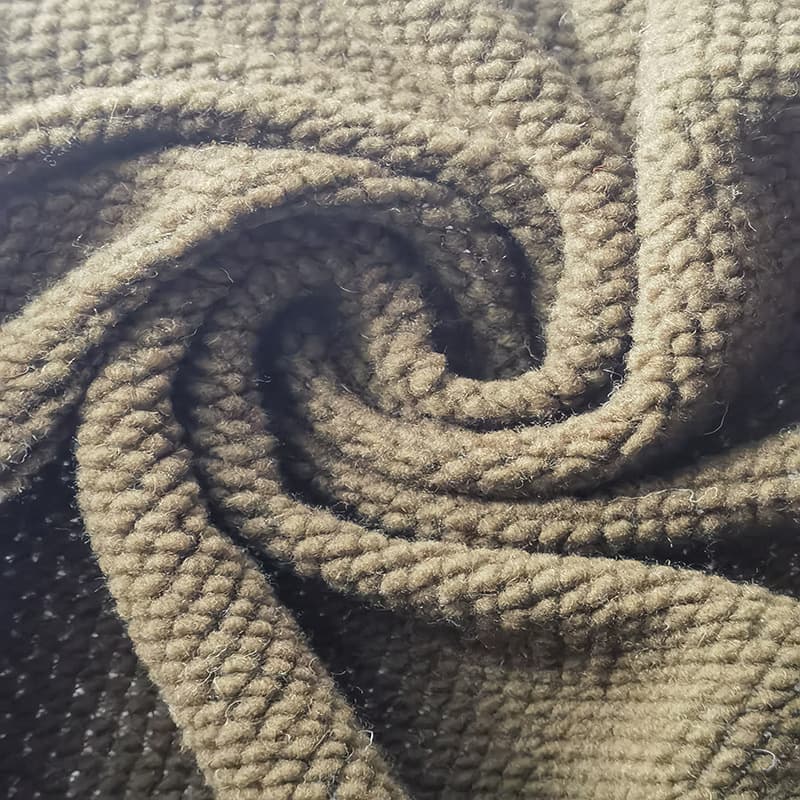
Coarse knit wool fabric rarely gets the same attention. It’s heavier, rougher, and less forgiving. Yet it excels where finer fibers fall short: superior durability, structure, and functional performance. From rugged outerwear to long-lasting upholstery, coarse wool does the heavy lifting.
This guide cuts through the marketing fluff. We’ll break down fiber diameter, knit structures, key performance trade-offs, and the practical applications where coarse knit wool truly outperforms everything else.
What Exactly Defines Coarse Knit Wool Fabric?
The term “coarse” refers primarily to fiber diameter. Micron count classifies wool fibers—the average thickness of individual fibers. Fine merino wool measures between 15 and 24 microns, while traditional wool can reach up to 30 microns. Coarse wool typically exceeds 32.5 microns in diameter.
Coarse knit wool fabric is exactly what it sounds like: wool yarns with thicker fibers, knitted into a fabric structure rather than woven. The knit construction adds stretch and flexibility that woven wool fabrics lack. The coarse fibers themselves bring strength, resilience, and a distinct texture that finer wools simply cannot replicate.
The Fiber Diameter Spectrum
-
Fine wool (≤24.5 microns): Soft, next-to-skin comfort, premium apparel
-
Medium wool (24.6–32.5 microns): Balanced performance, sweaters and outerwear
-
Coarse wool (>32.5 microns): Maximum durability, heavy-duty applications
The coarser the fiber, the fewer crimps per inch—fine wools have up to 30 waves per inch, while coarse wools have 5 or fewer. This lower crimp means less natural elasticity but greater structural stability. Coarse wools also tend to have higher lustre than fine types, giving them a subtle sheen that adds visual interest.
How Does Coarse Knit Wool Fabric Compare to Fine Wool?
The tradeoff between coarse and fine wool comes down to a simple equation: softness versus durability. You cannot maximize both. Fine wool feels luxurious against the skin but wears down faster. Coarse wool feels more rugged but lasts significantly longer.
| Factor | Coarse Knit Wool Fabric | Fine Wool (e.g., Merino) |
|---|---|---|
| Fiber Diameter | >32.5 microns | 15–24 microns |
| Softness | Rougher texture; can feel prickly against skin | Exceptionally soft; comfortable next to the skin |
| Dayanıklılık | Highly durable; outlasts fine wool in abrasion tests | Less durable; wears faster |
| Tipik Uygulamalar | Outerwear, upholstery, carpets, blankets, industrial uses | Base layers, lightweight knitwear, premium apparel |
| Cost | Generally more affordable | Premium pricing |
| Ağırlık | Heavier, denser fabric | Lighter, more drapable |
The key insight here is that coarse knit wool fabric is not a “lesser” product—it is a different product for different jobs. If you are making a delicate sweater meant to be worn against bare skin, fine wool is the obvious choice. But if you are manufacturing rugged outerwear, upholstery that must withstand years of use, or carpets that take constant foot traffic, coarse wool is actually the superior option.
What Are the Key Performance Properties of Coarse Knit Wool Fabric?
Coarse knit wool fabric delivers a combination of performance characteristics that few other textiles can match.
Exceptional Durability
This is the headline feature. Coarse wool fibers are thicker and stronger than fine wool fibers, giving the fabric superior resistance to abrasion, tearing, and general wear. In Martindale abrasion tests—the industry standard for measuring textile durability—coarse wool fabrics consistently outperform many synthetic alternatives. For products that see heavy use, this durability translates directly into longer product lifespans and fewer customer complaints.
Thermal Insulation
The dense knit structure of coarse wool fabric traps air pockets between the fibers, creating an effective barrier against cold. A 14-gauge thick wool knit can deliver up to 40% more warmth than thinner sweaters. This makes coarse knit wool fabric ideal for winter coats, jackets, and heavy blankets.
Breathability and Moisture Management
Wool is naturally breathable. The fiber structure allows moisture vapor to escape while the fabric simultaneously absorbs and releases moisture without feeling wet. Coarse knit wool fabric maintains this breathability even at heavier weights, making it comfortable across a range of temperatures.
Natural Resilience
Coarse wool has inherent “body” and resilience that help the fabric maintain its shape. It resists wrinkling better than many other natural fibers. The knit construction adds stretch and recovery, so garments and upholstery keep their form through repeated use.
Odor and Stain Resistance
Wool naturally resists odors, dirt, and water. This is not a chemical treatment—it is an inherent property of the fiber itself. For outdoor apparel and upholstery, this means less frequent cleaning and longer intervals between maintenance.
Where Is Coarse Knit Wool Fabric Most Commonly Used?
The applications for coarse knit wool fabric span multiple industries. Understanding where this material excels helps you assess whether it fits your specific needs.
-
Outerwear and Heavy Apparel
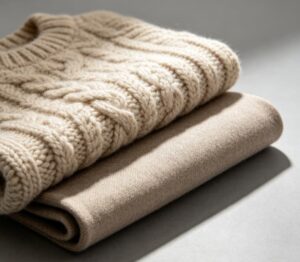
Coarse knit wool fabric is a workhorse in the apparel industry for rugged, cold-weather garments. It is used in sturdy coats, jackets, sweaters, and cardigans that need to withstand daily wear while providing serious warmth. The fabric’s durability makes it particularly well-suited for workwear and outdoor clothing that faces tough conditions.
-
Upholstery and Home Textiles
The durability of coarse wool makes it a natural fit for upholstery fabric, curtains, and blankets. It holds up to the friction of daily use, resists staining, and maintains its appearance over time. For furniture that gets heavy use—think commercial settings, family rooms, or high-traffic areas—coarse wool upholstery outperforms many finer fabrics.
-
Carpets and Floor Coverings
Coarse wool has long been the material of choice for high-quality carpets and rugs. The thick fibers stand up to foot traffic, resist crushing, and retain their appearance for decades. The natural resilience of coarse wool means carpet fibers bounce back after compression, maintaining a fresh look far longer than synthetic alternatives.
-
Industrial and Specialty Applications
Beyond consumer goods, coarse wool is finding new applications in insulation, acoustical materials, construction, and even automotive interiors. Wool’s natural sound-absorbing properties make it effective for acoustic panels, while its flame-retardant characteristics add safety value. Around 60 percent of coarse wool can be used in acoustic products that absorb rather than reflect sound.
How Does Knit Construction Affect Coarse Wool Fabric Performance?
The “knit” in coarse knit wool fabric is as important as the “coarse.” Knitting creates a different fabric structure than weaving, with distinct performance implications.
Knit fabrics are constructed from a single continuous yarn that loops back on itself, creating interlocking rows of stitches. This structure gives knit fabrics natural stretch and flexibility that woven fabrics lack. For apparel, this means garments move with the body rather than resisting it.
The gauge of the knit—how many stitches per inch—also matters. Coarse needle knits (lower gauge, like 7gg) create a more open, breathable structure while maintaining durability. The coarse needle knit structure enhances breathability and shape retention, making it ideal for outerwear that needs to balance warmth with comfort.
The knit structure also affects how the fabric performs in washing. Studies show that wool knit fabrics—particularly in rib structures—maintain greater stability after washing than cotton knits, which show substantial deterioration. This wash stability is a major advantage for products that will be cleaned repeatedly.
What Should You Consider Before Choosing Coarse Knit Wool Fabric?
Selecting coarse knit wool fabric is not about whether it is “good” or “bad.” It is about whether it fits your specific application. Here are the key factors to evaluate.
End-Use Application
Start with what you are making. If the product needs to be soft against skin, coarse wool may cause discomfort—fibers above 25 microns can feel prickly. If the product needs durability, structural integrity, and warmth, coarse wool is an excellent choice. Match the material to the job.
Weight and Drape
Coarse knit wool fabric is heavier than fine wool fabrics. This weight contributes to warmth and durability but also affects how the fabric drapes. For structured garments like coats and jackets, the weight is an advantage. For lightweight, flowing garments, it is a drawback.
Cost Considerations
Coarse wool is generally more affordable than fine merino. The fibers are more abundant and less expensive to process. For manufacturers working with tight margins, this cost advantage can be significant without sacrificing performance where it matters most.
Sustainability Profile
Wool is a natural, renewable, and biodegradable fiber. Consumer demand for sustainable textiles continues to grow, and wool’s environmental credentials are a genuine selling point. Coarse wool, in particular, often comes from breeds that are hardy and require fewer inputs than fine-wool sheep, adding another layer of sustainability.
How Does Coarse Knit Wool Fabric Perform in Real-World Conditions?
The laboratory properties matter, but real-world performance is what ultimately counts.
Thermal Performance
Coarse wool quilts have been tested for thermal insulation value, with one study recording a Tog value of 3.23. For context, a Tog rating of around 2.5 to 4 is considered suitable for autumn and winter bedding. This confirms that coarse wool provides meaningful insulation for cold-weather applications.
Yıkama Dayanıklılığı
Wool knit fabrics maintain their dimensional stability better than cotton knits after washing. This is particularly important for garments and upholstery that will be cleaned regularly. The coarse fibers and dense knit structure resist shrinkage and deformation better than finer, more delicate fabrics.
Aşınma Direnci
Coarse wool fabrics excel in abrasion tests. Pound for pound, innovative coarse wool yarns have been shown to outlast some of the industry’s leading synthetic textiles in Martindale abrasion tests. This is not a marginal difference—it is a significant performance advantage for high-wear applications.
What Does the Future Hold for Coarse Knit Wool Fabric?
The wool market continues to evolve. The resurgence of premium fine wool demand in luxury fashion gets most of the headlines, but coarse wool is quietly expanding its footprint.
New technologies are improving coarse wool performance. Innovative processing methods can draft coarse long wool fibers around performance filaments, creating finer yarns that retain the durability of coarse wool while improving handle and drape. These advances are opening new applications for coarse wool that were previously dominated by synthetics.
Sustainability trends also favor wool. As consumers and regulators push for reduced reliance on petroleum-based fibers, natural, biodegradable wool becomes increasingly attractive. Coarse wool, with its lower processing costs and abundant supply, is well-positioned to capture this growing demand.
Making the Right Choice for Your Project
Coarse knit wool isn’t for every application. If you’re looking for feather-light, next-to-skin softness in base layers, finer wools will serve you better. But when your project calls for real durability, reliable warmth, solid structure, and natural performance, coarse knit wool stands out as a strong contender.
Be honest about your needs: What kind of wear and weather will it face? How often will it be used and cleaned? What are your budget and longevity goals? These practical factors usually make the decision clear.
That’s exactly why more designers and manufacturers are turning back to it. Coarse knit wool does the tough work that delicate fibers can’t — without compromise. For the right applications, it’s simply the smarter choice.
Ready to see if it fits your next project? Start with your core requirements — durability, warmth, weight, and cost — then request samples and test them yourself. Specs tell part of the story, but nothing replaces the real feel in your hands.