Introduction
When a fashion brand first considers adding double-faced wool coats to its collection, the conversation almost always turns to the same anxious question: Is this fabric going to be a nightmare for our production team?
It is a fair concern. Double faced woolen coating fabric has a reputation — sometimes for luxury, sometimes for difficulty. Walk into any garment factory, and you will hear two opposite opinions. One seamstress will tell you it is a joy to work with; the production manager will warn you about slow lines and high reject rates.
So who is right?
The truth is more nuanced than a simple yes or no. This guide does not sell you a dream. It gives you a straight, practical answer about whether double faced woolen coating fabric fits your brand’s sewing reality. You will learn how this double faced woolen coating fabric behaves under the needle, what separates easy sewing from constant frustration, and exactly what you need in place before cutting your first yard.
Understanding What Double Faced Woolen Coating Fabric Actually Is
Before discussing sewing challenges, it’s important to understand what makes double faced woolen coating fabric unique.
Unlike conventional wool — which has a distinct right side and wrong side — double-faced wool features two finished, usable surfaces on both sides of the cloth. This fabric is created from two separate layers of wool cloth, woven together on a specialized loom, with the layers loosely connected at their inner faces through interlocking yarns.
Why this matters for sewing:
- The interlocking yarns can be carefully separated at the seam edges, allowing raw edges to be folded inward and finished invisibly.
- This technique forms the foundation of every high-quality double faced wool garment.
- Originating from the Italian textile mills of Biella — a region renowned for fine wool — the process requires precision at every stage, from yarn selection to loom configuration.
What Hongyang offers:
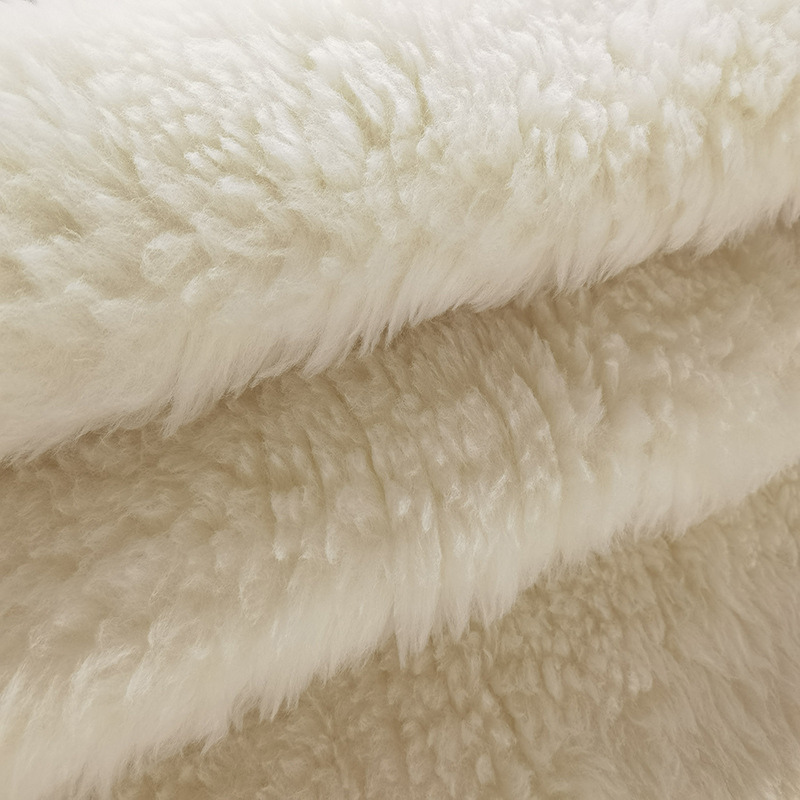
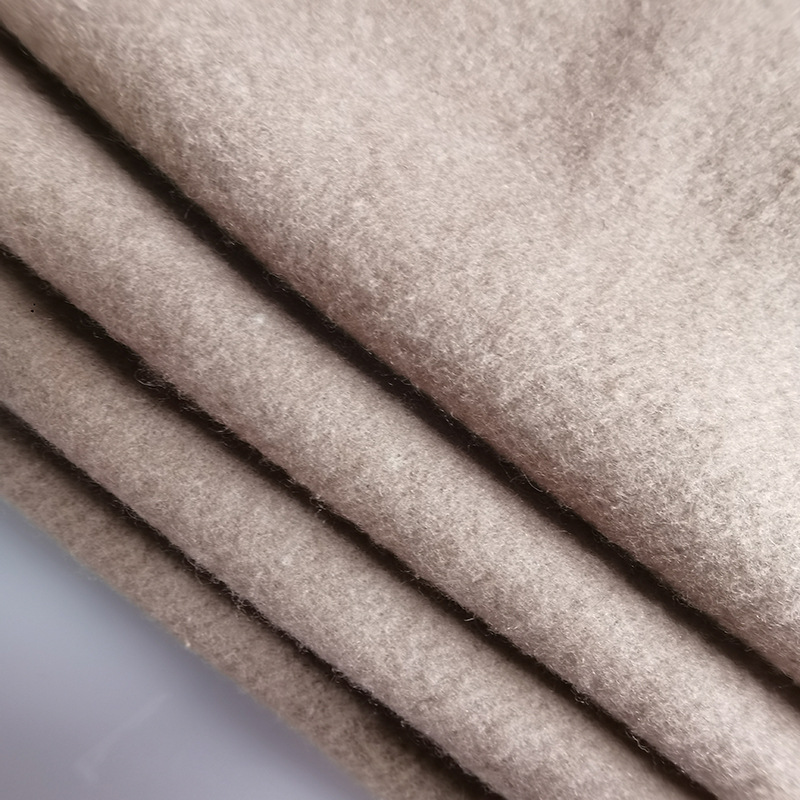
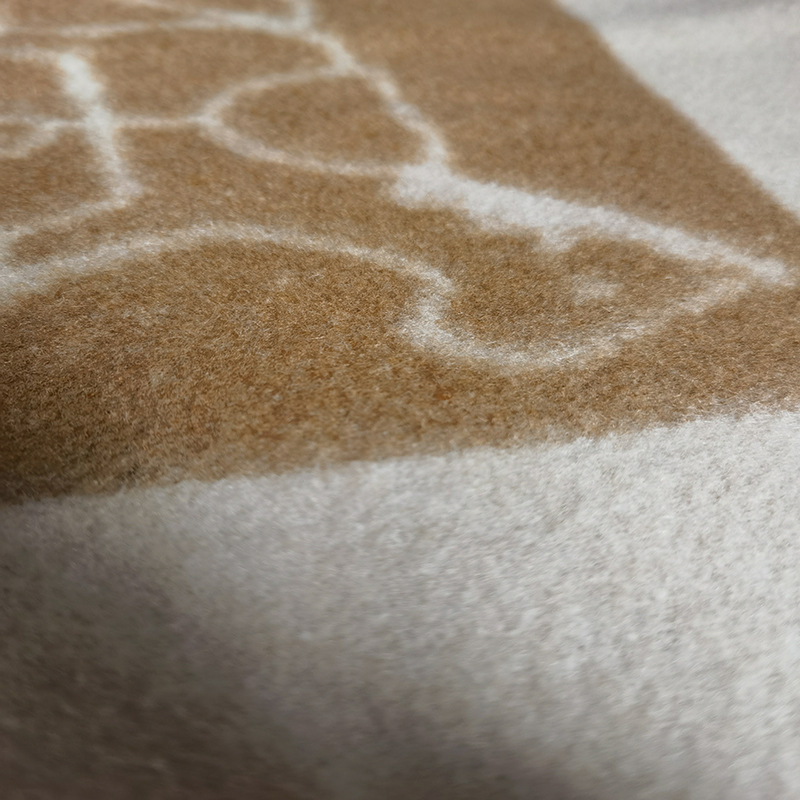
The Camel & Khaki Colorway double faced woolen coating fabric from Nantong Hongyang Woolen Products Co., Ltd. features:
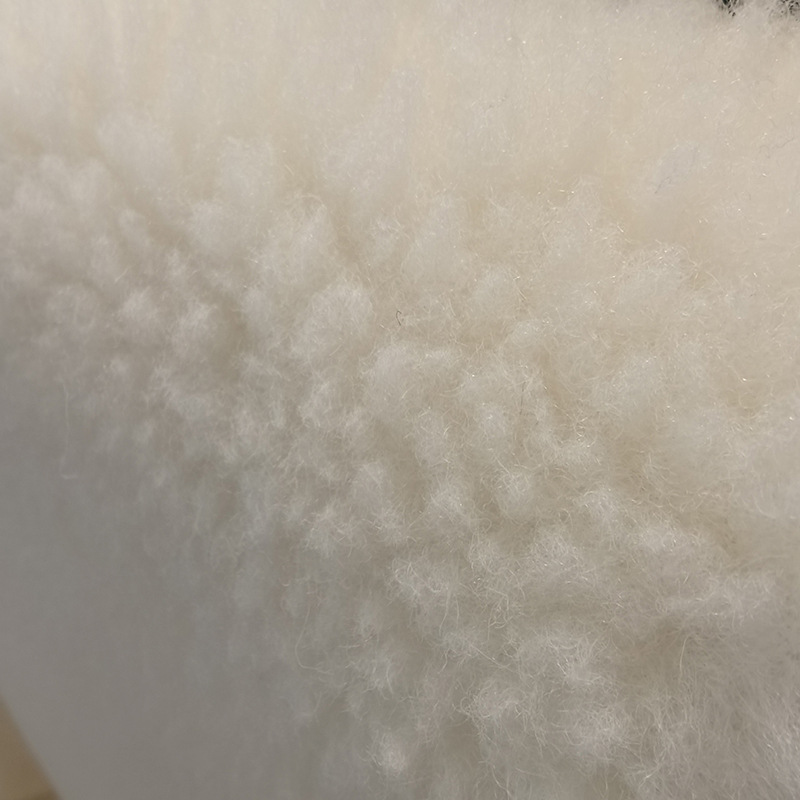
- Pile face: 100% wool
- Base cloth: 100% polyester filament
- Weight: 570 g/m² (mid-range for double-faced wool, typically 550–800 GSM)
- Width: 155 cm
This balance of weight and stability allows the fabric to hold its shape beautifully without becoming unmanageable on the cutting table. For brands new to double faced wool, starting with a reliable material like Hongyang’s can significantly reduce the learning curve.
Why This Fabric Feels Different on the Sewing Machine
Many guides overlook this detail: double faced woolen coating fabric does not fray like cotton or linen. Wool fibers are generally felted together, so:
- Edges rarely unravel, which can be helpful, but
- Seam allowances cannot be estimated by fraying, making clear marking essential before cutting.
The fabric also has substantial body:
- At 570 g/m², it holds its shape without sagging, making pattern alignment and cutting more predictable.
- This body requires sewing machines with enough motor power to pierce multiple layers, particularly at collars, sleeves, or pocket welts.
⚠️ Any double faced woolen coating fabric above 500 g/m² will require a machine with strong vertical needle clearance.
The Two Very Different Ways to Sew Double Faced Woolen Coating Fabric
This is the single most important point in this entire article: there is no single answer to whether this fabric is easy to sew, because the sewing method changes everything.
You have two fundamentally different approaches:
Method One: Traditional Hand Sewing
Traditional double faced wool garment construction relies on hand sewing. The core technique involves carefully splitting the two layers of double faced woolen coating fabric at the seam edge, folding the raw edges inward, and then joining them with an invisible hand stitch that leaves no visible thread on either side. The process is meticulous, time-consuming, and produces garments of exceptional quality.
The workflow for hand sewing typically follows a sequence:
-
First, a line of machine basting is run along the seam allowance (typically 1.2 cm from the edge) to prevent the layers from separating during handling
-
The fabric is then carefully split or “peeled” apart between the two layers up to the basting line
-
Each raw edge is folded inward, and the seam is joined using a hidden slip stitch (called a “migration stitch” or “catching stitch”)
-
All seam allowances are captured between the two layers, leaving both outer surfaces completely clean
Why do brands still choose hand sewing? Because the results are unmatched. High-end double faced wool coats are valued precisely because of the craftsmanship involved. A single double faced wool coat can require two to three times the labor hours of an equivalent lined wool coat made from conventional fabric. That labor cost is what makes a USD 1,000 coat feel different from a USD 200 coat. For luxury brands positioning themselves on quality and exclusivity, hand finishing is not a bug — it is the entire selling point. And that selling point starts with the double faced woolen coating fabric itself.
Method Two: Machine Sewing
Now here is the good news for brands that need scale: modern industrial sewing technology has transformed what is possible with double faced woolen coating fabric.
Specialized double-thread industrial machines can now handle the joining and seaming of double faced woolen coating fabric with efficiency that hand sewing cannot match. These machines are equipped with pneumatic feeding functions that automate material feeding, ensuring uniform speed and reducing human error.
Some key specifications of such equipment include:
-
Double-thread configuration with zigzag blind stitching for invisible seam finishing
-
Adjustable thread tension for different fabric weights and compositions
-
Single-needle operation compatible with fabric thicknesses ranging from thin to heavy
-
CE and ISO certifications for industrial safety and quality standards
The efficiency gains are substantial. One properly configured double faced wool sewing machine can replace the workload of three to five traditional hand sewers. That is not a marginal improvement — it is an order-of-magnitude shift in production capacity. For brands producing mid-range collections, investing in the right equipment for double faced woolen coating fabric pays for itself within two to three seasons.
Which One Is Right for Your Brand?
| Aspect | Traditional Hand Sewing | Specialized Machine Sewing |
|---|---|---|
| Labor hours per garment | High (2–3× conventional) | Moderate (comparable to lined garments) |
| Stitch visibility | Completely invisible | Nearly invisible (advanced machines) |
| Skill requirement | Highly skilled artisans required | Trained machine operators |
| Production volume | Low to medium | Medium to high |
| Garment price point | Premium / Luxury | Mid to high range |
| Investment needed | Skilled labor recruitment | Equipment purchase + training |
| Suitability for this fabric | Excellent for high-end | Excellent for volume |
The Specific Techniques That Make Sewing Possible
Let us get practical. Whether you choose hand finishing or machine sewing, there are techniques you need to master.
-
The Split-and-Fold Method
This is the fundamental skill. At every seam, you need to separate the two layers of the double faced woolen coating fabric at the raw edge. You can do this manually by carefully pulling the layers apart, or you can use a specialized splitting machine that creates a clean, uniform separation.
Here is an important rule: when using a splitting machine, the fabric must pass through slowly and remain perfectly flat to avoid damaging the material. This step is unique to double faced woolen coating fabric; you will never do it with single-layer wools or linens.
Once the layers are separated, each raw edge is folded inward so that the cut edge disappears between the two fabric layers. At this point, the seam is ready to be joined — either by hand or by machine.
-
The Role of Fusible Interlining
Here is a technique that many manufacturers overlook but should not: all cut fabric pieces require fusible interlining (stay tape) at the seams before sewing begins. This tape is applied using high heat and pressure to secure the double faced wool layers together.
Why does this matter? The interlining serves two critical functions: it adds “body” or stiffness to the seam area, preventing the fabric from collapsing or wrinkling, and it provides structural support that makes the seam lines flow more smoothly and elegantly.
In high-end production, manufacturers use imported interlining — which can cost up to ten times more than domestic alternatives — precisely because it delivers better results at the seam. Even for mid-range production, brands like Hongyang recommend testing different interlining weights to match the fabric’s 570 g/m² structure. Without proper interlining, even the best double faced woolen coating fabric will produce soft, unstable seams.
-
Pressing Is Not an Afterthought
One more point that separates successful double faced wool sewing from failed attempts: pressing happens throughout the construction process, not just at the end.
Localized pressing is applied as seams are completed, not after the entire garment is assembled. At the final stage, steam pressing is used to shape the shoulders and other curved areas — a task that only experienced technicians can perform correctly. After each pressing step, the garment must be hung vertically immediately to preserve the three-dimensional shape while it sets.
Tool recommendation: A wood clapper is invaluable for double faced wool pressing. After applying steam, pressing the seam with a clapper locks the fibers in place and creates a crisp, flat finish that holds.
What Brands Need to Consider Before Choosing Double Faced Woolen Coating Fabric
So, whether double faced woolen coating fabric is easy to sew really depends on a brand’s production setup and quality requirements. It is not a simple yes-or-no answer, but a matter of matching capability with expectations.
To evaluate this properly, it helps to break it down into a few practical questions.
Ask Yourself These Questions
Does your current production team have experience with multilayer fabrics? If your team has only sewn standard coating wools or linens, the learning curve for double faced materials is real. You will need training time and likely some sample runs before production-ready quality is achieved.
Are you prepared for the seam finishing requirements? Double faced wool requires every seam to be finished invisibly. This is not optional — it is the defining characteristic of the fabric. If your production process relies on serged seams or overlocked edges, you will need to retool.
Do you have the right equipment? Standard home sewing machines can handle light wool fabrics with a 90/14 needle, but for production volumes, specialized industrial machines with pneumatic feeding and double-thread configurations are strongly recommended. These machines are designed specifically for the unique characteristics of double faced woolen coating fabric.
What is your target price point? This is the most practical question of all. If you are producing garments at the USD 50–150 wholesale price point, the labor costs of hand finishing will destroy your margins. Machine sewing offers a viable path, but it still requires investment in specialized equipment and operator training. If you are producing luxury goods at USD 300+, hand finishing is not an obstacle — it is a marketing advantage. Remember, the double faced woolen coating fabric itself is only one part of the cost equation; the real expense is in the sewing method you choose.
Hongyang’s Double Faced Woolen Coating Fabric — What Makes It Production-Friendly
Hongyang’s Camel & Khaki Colorway double faced woolen coating fabric is engineered with production in mind. Here is why:
-
Composition: 100% wool pile face provides the luxurious hand feel and warmth that customers expect, while the 100% polyester filament base cloth adds dimensional stability that reduces stretching and distortion during cutting and sewing
-
Weight: At 570 g/m², the fabric falls in the mid-to-heavy range of double faced wool — heavy enough to hold structure beautifully but not so heavy that it strains standard industrial sewing equipment
-
Width: 155 cm provides a generous cutting yield, reducing the number of seams needed for larger garment pieces
-
Finish: The roll-ball (napped) finish creates a soft, plush surface that accepts interlining application cleanly and holds press lines well
-
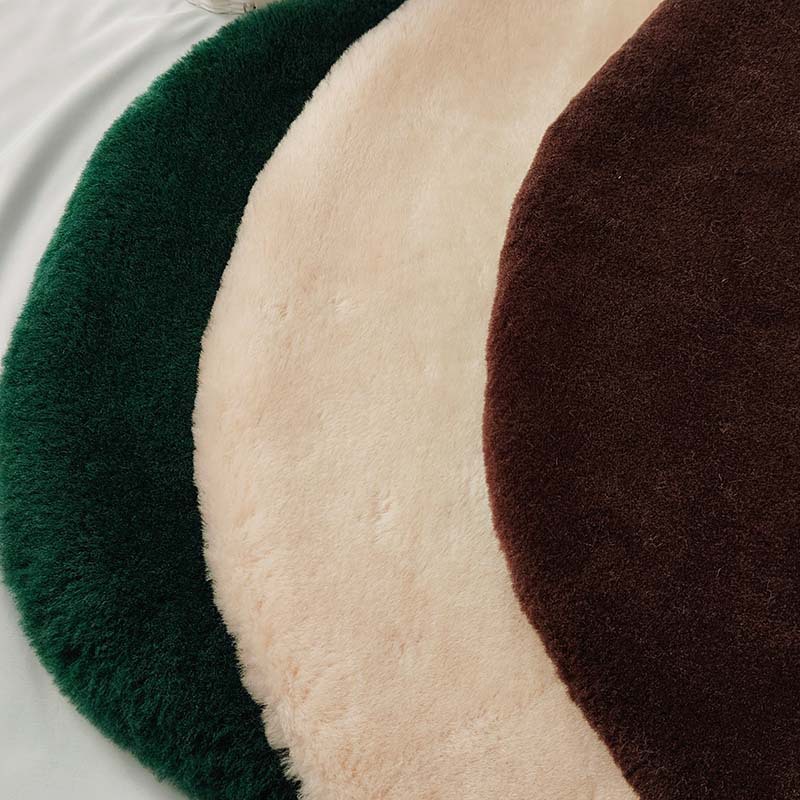
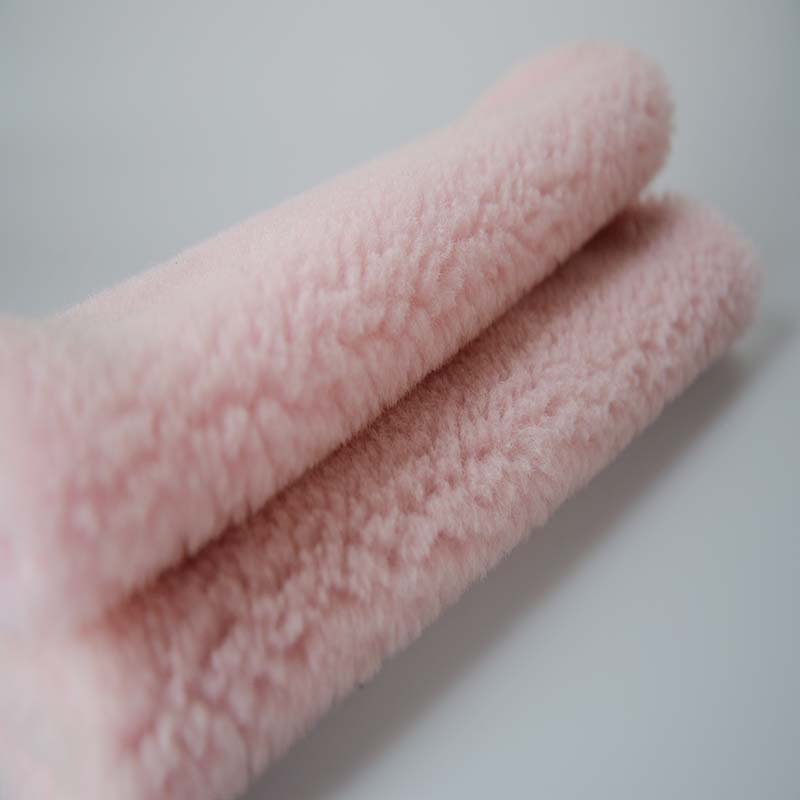
Customization: Hongyang can produce similar fabrics with customized raw material compositions, styles, and colors according to buyer requirements, with pricing determined by plush style, fabric composition, and order quantity
For brands that want a reliable double faced woolen coating fabric without unpredictable variations between batches, Hongyang’s quality control and customization options provide a clear advantage.
A Quick Reference Guide for Brand Decision-Makers
Use this checklist to determine whether double faced woolen coating fabric fits your brand’s production capabilities:
YES, if:
-
You have or are willing to invest in specialized double faced wool sewing equipment
-
Your team includes or can be trained in split-and-fold seam finishing techniques
-
Your target price point supports the additional labor or equipment costs
-
You want the unlined, reversible, premium hand-feel that only double faced wool can deliver
-
You are producing medium runs where setup costs can be amortized
NO, if:
-
Your production relies entirely on conventional single-layer garment assembly
-
You cannot train staff in new seam finishing methods
-
Your price point requires an absolute minimum of labor hours per unit
-
You are producing very short runs where the learning curve is not worthwhile
-
You do not have access to specialty pressing and interlining application equipment
Making Double Faced Wool Work for Your Brand
Is double faced woolen coating fabric easy to sew? Not in the way cotton shirting is — but it’s far from impossible. Its unique properties require respect, the right techniques, and suitable equipment — all of which are well documented and commercially available.
For brands ready to invest in proper training and tools, this fabric opens a premium category: unlined, reversible garments that are warm without bulk and immediately recognizable for quality. Skipping steps or cutting corners, however, will show in the finished product.
With the right partner, preparation, and commitment, double faced wool is fully manageable — and the results are worth every moment of the learning curve. Whether you’re sourcing your first batch or scaling production, success comes from matching the fabric to your factory’s capabilities.
Hongyang Woolen provides professional customization and consistent quality, from raw material composition and color to style. Their team understands production challenges and can guide you in selecting the right fabric for your collection.
Request swatches or discuss your production needs with Hongyang today — and make double faced wool a reliable part of your line.