Introduction
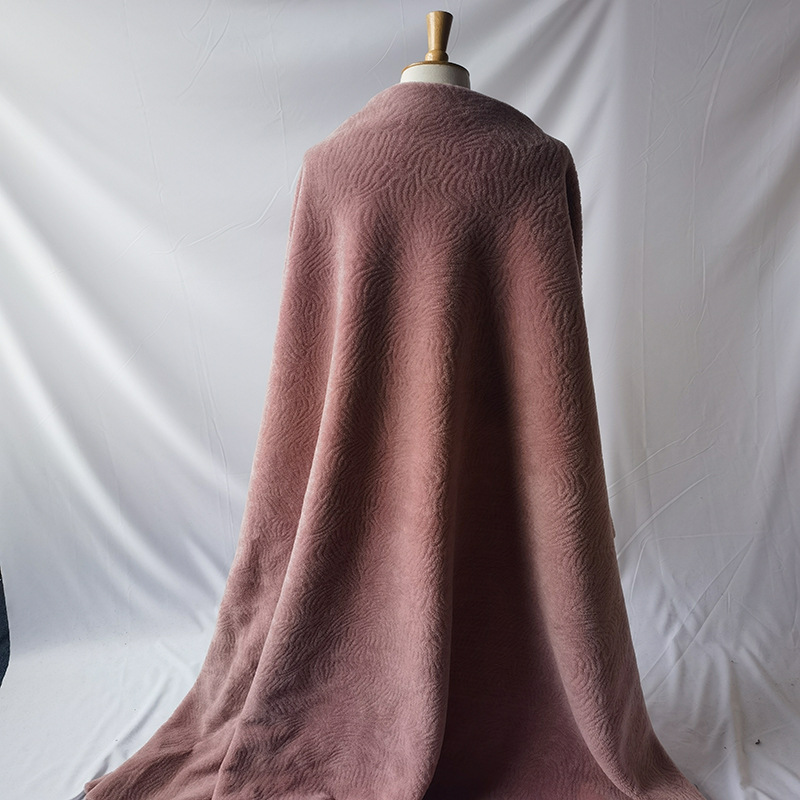
Wool jacquard fabric is structurally superior to standard wool blends in several measurable respects—durability, dimensional stability, and pattern integrity—but its suitability depends entirely on the intended application. The Hongyang European-style wool jacquard fabric, with 600 g/m² density, 100% wool pile face, and a polyester base cloth, represents a distinctly different product category from lightweight blended suitings or printed wool textiles.
This article compares jacquard versus standard blending technologies across seven key performance dimensions, to help designers and procurement professionals determine which is appropriate for their specific requirements.
What Is Wool Jacquard Fabric and How Does It Differ from Standard Wool Blends?
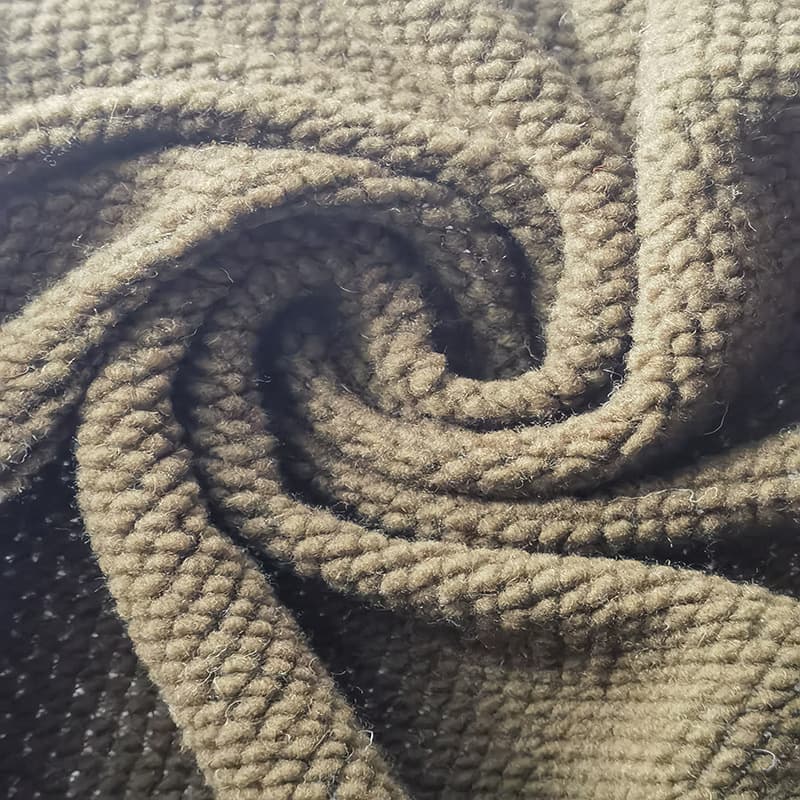
A wool jacquard fabric is a textile woven on a Jacquard loom—a machine that independently controls individual warp threads to form complex, integrated patterns during the weaving process. This definition refers to the weaving method itself rather than fibre composition or finishing treatment. Jacquard designs create raised motifs through the interlacing of coloured yarns, producing a three-dimensional texture that cannot be achieved through surface printing.
Standard wool blend fabric, by contrast, is defined primarily by fibre composition rather than structure. It refers to any textile made by combining natural wool with other fibres—such as cotton, linen, silk, polyester, nylon, or acrylic—to adjust cost, durability, or performance. Wool content typically ranges from around 30% to 70%. A wool blend can be produced in different weave structures, including plain, twill, satin, or dobby, and its patterns—if present—are usually applied through printing or dyeing after weaving.
In simple terms, wool jacquard fabric describes how the fabric is woven, while a wool blend describes what the fabric is made of. Importantly, a fabric can be both jacquard-woven and blended, as seen in Hongyang’s construction, which combines a 100% wool pile face with a 100% polyester base cloth.
The Jacquard Loom: Why Woven Patterns Outperform Printed Designs
The key difference between jacquard fabrics and standard wool blends lies not in fibre content but in pattern construction. Jacquard looms integrate designs directly into the fabric structure, while printed fabrics apply patterns onto the surface using digital, screen, or block printing methods. This fundamental distinction results in several performance differences:
- Inherent pattern permanence
On a wool jacquard fabric, the design is locked into the weave structure. It does not fade, peel, or crack because it is formed by yarns rather than surface dyes or inks. Printed wool blends, however, gradually fade over time due to washing cycles and UV exposure, especially where colour penetration is limited. - Reversible or structured appearance
A true wool jacquard fabric often shows a reversed pattern on the back side, reflecting its woven structure. This dual-sided characteristic provides design flexibility that most printed fabrics cannot achieve, as printed backs are usually plain or unfinished. - Thicker and more structured hand-feel
Because jacquard weaving increases yarn interlacement to create raised motifs, the fabric naturally becomes denser and more substantial. This added body enhances both perceived luxury and functional durability, especially in heavier applications such as 600 g/m² coat-weight textiles.
100% Wool Pile Face versus Standard Wool Blends: Comparing Thermal and Tactile Performance
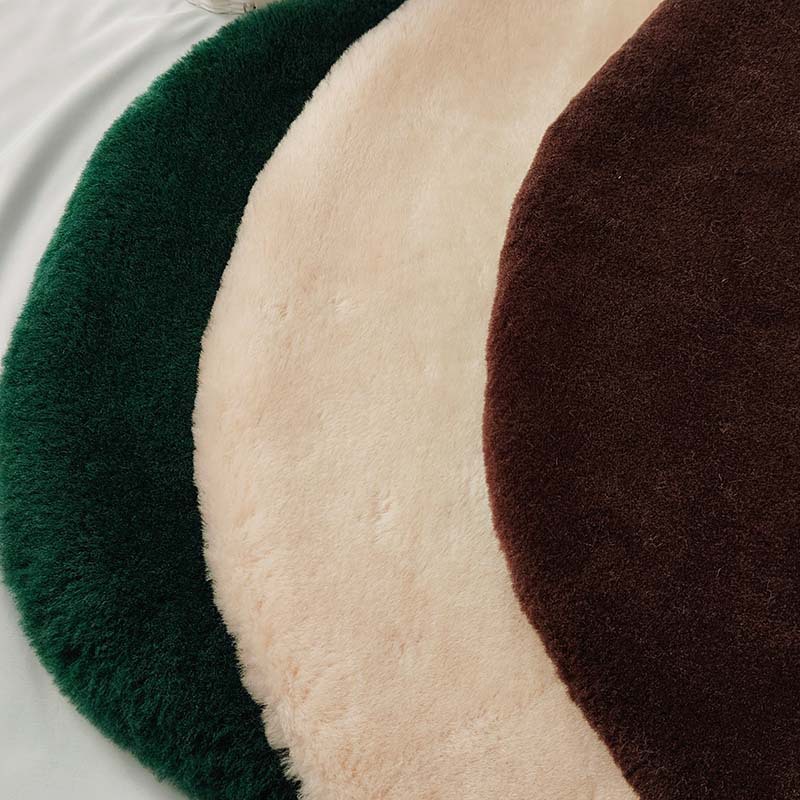
The Hongyang wool jacquard fabric features a pile face made entirely from 100% wool. This structure is different from standard wool blends, where wool is dispersed throughout the fabric and often combined with synthetic or cellulosic fibres to adjust performance and cost.
Pure wool retains the core advantages of natural wool fibre, including elasticity, thermal insulation, soft hand-feel, moisture regulation, and inherent flame resistance. With a weight of 600 g/m², the Hongyang fabric is positioned in the heavyweight category, offering strong warmth retention and structural body, suitable for winter outerwear and heavy-duty upholstery applications.
Standard wool blends, in contrast, exchange some of these natural properties for functional benefits such as lower cost, improved wrinkle resistance, reduced weight, or easier maintenance. However, these modifications also introduce trade-offs: synthetic fibres may reduce breathability, dilute the natural softness of wool, and in some cases shorten overall fabric lifespan compared to high-quality wool-rich constructions.
When garments require direct skin contact performance—such as coat linings, premium outerwear, or close-contact apparel—a 100% wool pile surface offers a clear advantage over blended structures where synthetic fibres dominate the surface layer.
Why a Polyester Base Cloth Improves Durability and Dimensional Stability
A common limitation of pure wool fabrics is their susceptibility to shrinkage, deformation, and long-term structural fatigue under repeated use. The Hongyang wool jacquard fabric addresses this issue through a composite structure: a 100% polyester base cloth combined with a 100% wool pile face.
Polyester is widely used for its high tensile strength, dimensional stability, wrinkle resistance, and excellent colour retention. By bonding the wool pile to a stable polyester foundation, the fabric achieves structural consistency that pure wool or conventional wool blends often cannot maintain.
This hybrid construction delivers several practical advantages:
- Reduced shrinkage — the polyester base minimizes relaxation shrinkage and dimensional distortion common in all-wool fabrics
- Improved shape retention — garments and textiles maintain their original cut and drape over time
- Enhanced abrasion resistance — the base layer reinforces the structure and reduces tearing or seam stress under load
For applications where structural reliability is as important as surface appearance—such as upholstery, tailored coats, and high-frequency use textiles—this composite design provides a more stable alternative to conventional wool blends.
Durability and Pattern Retention: Woven Jacquard versus Surface-Printed Wool Blends
When comparing wool jacquard fabric with printed wool blends, the key difference lies in how patterns are formed and how they age over time.
Jacquard fabric has been shown in comparative evaluations to perform approximately 30% better than standard wool fabrics in maintaining visible surface integrity under wear conditions. Its tightly interwoven structure also helps conceal minor stains, surface fuzzing, and abrasion more effectively than flat or plain woven wool blends.
This durability advantage is not limited to appearance. Wool jacquard fabric is engineered for long-term structural stability. Unlike printed textiles, where patterns sit on the surface, jacquard designs are integrated directly into the weave. There is no printed layer to fade, no coating to peel, and no surface dye layer to wear unevenly. Industry references often note that jacquard textiles can maintain their appearance for years, sometimes becoming long-life decorative materials due to their structural pattern integrity.
In contrast, standard wool blends with printed or dyed patterns follow a different lifecycle. While the base fabric may remain intact, the surface design gradually degrades due to washing, friction, and UV exposure. Screen printing offers moderate durability, but digital and block printing methods are more susceptible to fading and abrasion. For applications where visual consistency is critical—such as branded textiles, retail products, or decorative interiors—jacquard construction provides a significantly more stable long-term performance.
Lightweight versus Heavyweight: Comparing Applications of Wool Jacquard and Standard Wool Blends
Wool jacquard fabric and standard wool blends serve overlapping but distinctly different application ranges, largely driven by weight, construction, and surface treatment.
The Hongyang wool jacquard fabric weighs 600 g/m². This is a heavyweight textile by any measure, suitable for: outerwear coats and jackets requiring substantial drape and warmth; heavy upholstery where structural integrity matters; blankets and throws where both thermal insulation and decorative impact are desired; and industrial or commercial textiles requiring abrasion resistance and pattern permanence.
Standard wool blends occupy a broader weight spectrum. Lightweight blends (200–300 g/m²) are common for suiting and shirting, where breathability and drape matter more than insulation. Midweight blends (300–450 g/m²) appear in casual jackets, trousers, and skirts. Heavyweight blends (450 g/m² and above) overlap with jacquard territory but typically lack integrated pattern design.
| Comparative Dimension | Wool Jacquard Fabric | Standard Wool Blend |
|---|---|---|
| Pattern creation method | Woven into fabric during production | Printed or dyed onto the surface after weaving |
| Pattern permanence | Permanent; cannot fade, peel, or crack | Fades progressively with washing and UV exposure |
| Typical fabric weight | Heavyweight (500–800 g/m²) | Lightweight to heavy (200–600+ g/m²) |
| Single-sided vs reversible | Often reversible or structured on reverse | Typically single-sided; back is plain or undyed |
| Abrasion resistance | High; patterns mask surface wear | Moderate to high, depending on blend |
| Design complexity | Unlimited (individual thread control) | Limited by print registration |
| Shrinkage control | Varies with base cloth | Polyester blends offer good stability |
For garment designers and textile buyers, the choice is not about which fabric is “better” in absolute terms but about matching the fabric to the use case. For lightweight shirting or summer suiting, a 600 g/m² jacquard is inappropriate regardless of its durability. For heavy outerwear, upholstery, or any application requiring pattern permanence under abrasive conditions, wool jacquard fabric delivers performance that printed wool blends cannot match.
Care and Maintenance: How Wool Jacquard Fabric Compares to Standard Wool Blends
Maintenance requirements differ significantly between wool jacquard fabric and standard wool blends, and these differences affect total lifecycle cost and usability.
Pure-wool and high-wool-content fabrics generally require gentle care—hand washing in cold water with mild detergent, or professional dry cleaning for delicate pieces. The natural protein structure of wool fibres is vulnerable to heat, agitation, and alkaline detergents, all of which can cause felting, shrinkage, or fibre damage.
The Hongyang wool jacquard fabric incorporates a polyester base cloth, which improves dimensional stability during cleaning. Polyester does not felt or shrink like wool, so the composite fabric resists the relaxation shrinkage that affects all-wool fabrics. This does not make the fabric machine-washable—the wool pile face still requires appropriate care—but it reduces the risk of permanent deformation compared to pure-wool constructions.
Standard wool blends vary widely in care requirements depending on blend composition. Wool-polyester blends offer improved wrinkle resistance and may be machine-washable on gentle cycles, depending on the specific ratio and construction. Wool-cotton blends are more breathable but may shrink if not handled carefully. Wool-silk blends, used in luxury apparel, require the most delicate handling.
For commercial applications where garments or textiles will be cleaned frequently—such as hotel upholstery, rental garments, or institutional textiles—the improved dimensional stability of a polyester-backed wool jacquard fabric provides measurable lifecycle advantages. For private ownership where dry cleaning is acceptable, pure wool and jacquard constructions offer comparable care profiles.
Nordic Design and Pattern Flexibility: Aesthetic Advantages of Jacquard Weaving
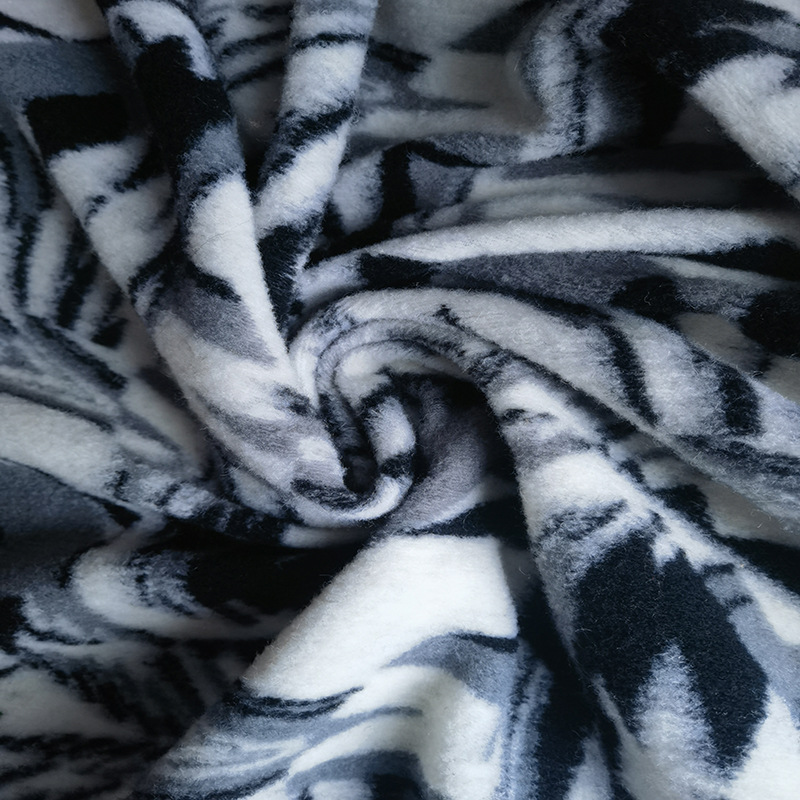
The Hongyang wool jacquard fabric is specified with a striped Nordic design—a pattern aesthetic that benefits directly from jacquard construction.
Nordic design motifs typically feature geometric regularity, high-contrast colour transitions, and clean linear elements. These characteristics play to the strengths of jacquard weaving, where individual thread control allows for sharp colour boundaries and precise pattern registration that cannot be achieved with dobby weaving or simple printing. Unlike dobby looms, which control warp yarns in groups and are limited to approximately 40 harnesses, Jacquard looms control each warp thread individually. This enables “unlimited” design complexity—floral motifs, geometric patterns, figurative elements, and textural effects can all be woven directly into the fabric rather than applied as a surface treatment.
For designers requiring pattern registration accuracy—stripes that align precisely, tartan grids that intersect correctly, or motifs that repeat without visible seams—wool jacquard fabric offers a level of control that printing cannot match. The pattern is built into the weave plan, not dependent on print registration tolerances.
Furthermore, wool jacquard fabric can be produced in both patterned and plain variations using the same equipment. Top-dyed and piece-dyed techniques allow for both fresh, vibrant colourways and stable, subdued palettes. This technical flexibility supports both high-fashion and classic applications from the same production line.
Conclusion: Which Fabric Is Superior for Your Application?
Overall, the choice depends on application priorities. Jacquard construction is more suitable when long-term visual stability, texture depth, and fabric structure are required, especially in heavier end-use scenarios. Blended wool fabrics remain more practical for cost-sensitive or lightweight applications where flexibility is the main concern.
The Hongyang European-style wool jacquard fabric is developed for applications where both structure and design consistency are important, particularly in outerwear, upholstery, and decorative uses.
Ready to Source Wool Jacquard Fabric?
If you are evaluating materials for upcoming collections or projects, Hongyang Woolen Products can provide samples and technical support based on your requirements.