
Introduction
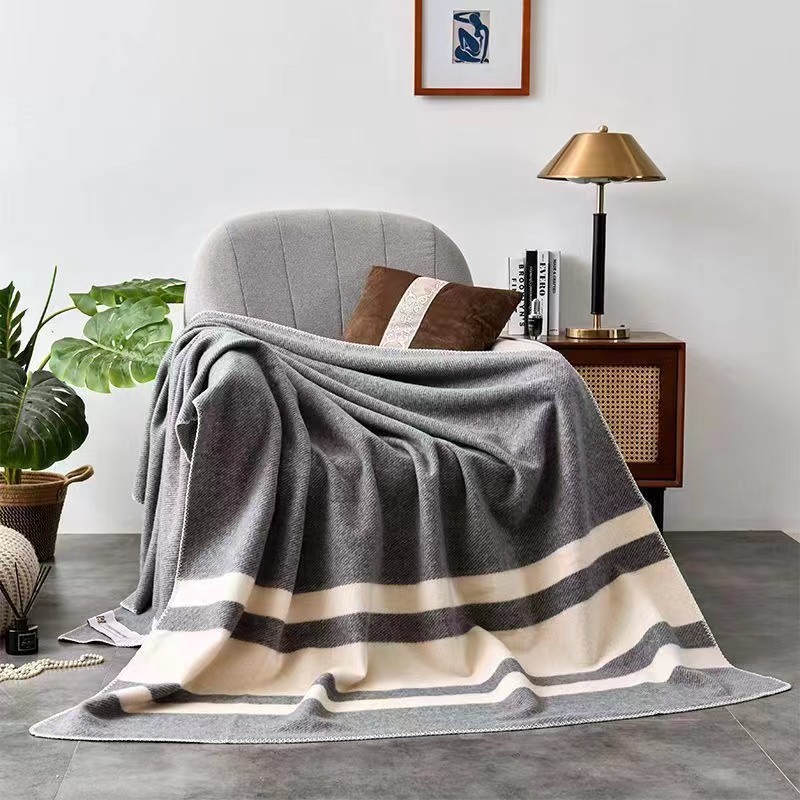
Once considered a niche luxury, double faced woolen coating fabric is now shaping the future of winter outerwear for 2026–2027. As designers and brands seek sustainable, lightweight, and ultra-warm options, production is expanding rapidly. This guide highlights the top color directions, innovative techniques, and practical sourcing tips to help you make the most of this premium fabric.
The Growing Demand for Double Faced Woolen Coating Fabric
The global coated fabrics market—covering everything from automotive upholstery to premium apparel—reached approximately USD 50.0 billion in 2025 and is forecast to grow at a 4.8% CAGR to USD 79.9 billion by 2035. While this includes industrial coatings, the high-end apparel segment is driving a disproportionate share of value growth. Why? Because modern consumers demand garments that perform without visible bulk.
This is precisely where double faced woolen coating fabric excels. Unlike single-faced materials that require separate linings, this construction combines two distinct surfaces into one integrated textile. As the wool coating fabric market expands—supported by rising demand for protective winter clothing and sustainable alternatives to synthetic puffers—designers are rediscovering wool’s natural breathability, moisture management, and thermal regulation properties.
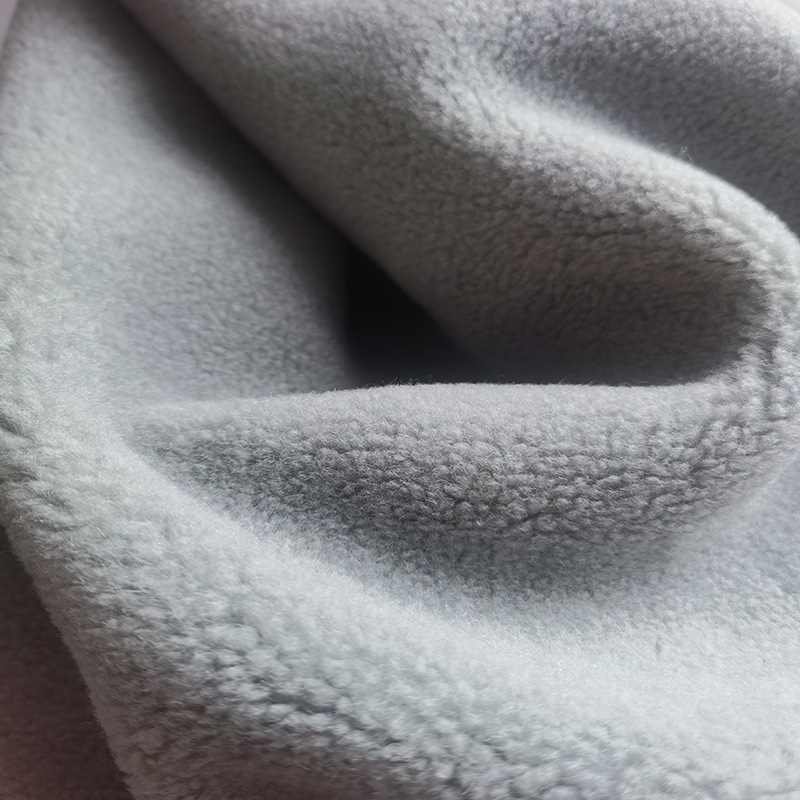
What makes this shift significant? The premium outerwear sector has long been dominated by down, synthetic fills, and bonded laminates. But consumers are increasingly skeptical of plastics and microplastics. Double faced woolen coating fabric offers a natural, fully biodegradable solution that delivers comparable insulation without compromising comfort or aesthetics. One face can be engineered for wind resistance, while the other is brushed to cloud-softness for next-to-skin comfort—eliminating the need for linings.
For brands committed to circular fashion, this is a compelling value proposition. When a garment is made from pure wool coating fabric without synthetic linings or adhesives, end-of-life recyclability becomes straightforward. The material can be returned to the fiber stream, not landfilled. As the industry moves toward digital product passports and stricter sustainability regulations, this built-in circularity gives double faced woolen coating fabric a decisive advantage over composite alternatives.
Color & Design Directions for Next Winter
If you are sourcing double faced woolen coating fabric for the 2026–2027 season, color selection will define your collection’s market relevance. Pantone’s London Fashion Week Autumn/Winter 2025–2026 report reveals a palette that balances heritage warmth with unexpected vibrancy.
1. Deep Earthy Tones (The Dominant Narrative)
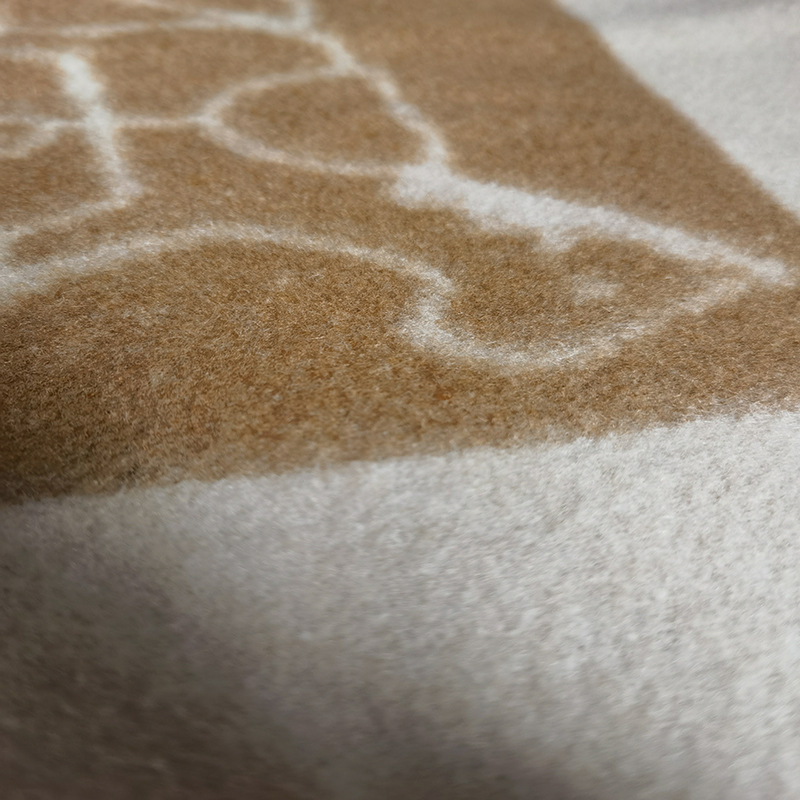
Rich browns, camel, and muted olive shades are not just trending—they have become seasonal staples. These colors work exceptionally well on double faced woolen coating fabric because deep, saturated hues accentuate the material’s tactile quality and hide the natural variations that make wool feel authentic. As one industry report notes, these earthy tones “evoke warmth and sophistication, making them perfect for winter outerwear”.
2. Jewel-Inspired Hues (The Luxury Upsell)
Emerald greens, sapphire blues, and amethyst purples are making a strong comeback. On woolen coating fabric, these saturated jewel tones deliver a “luxurious feel and can work across velvet, wool, or brushed cotton”. If your target customer seeks distinctive, high-visibility outerwear rather than neutrals, jewel-toned double faced woolen coating fabric can command premium pricing.
3. Warm Neutrals & Greys (The Timeless Foundation)
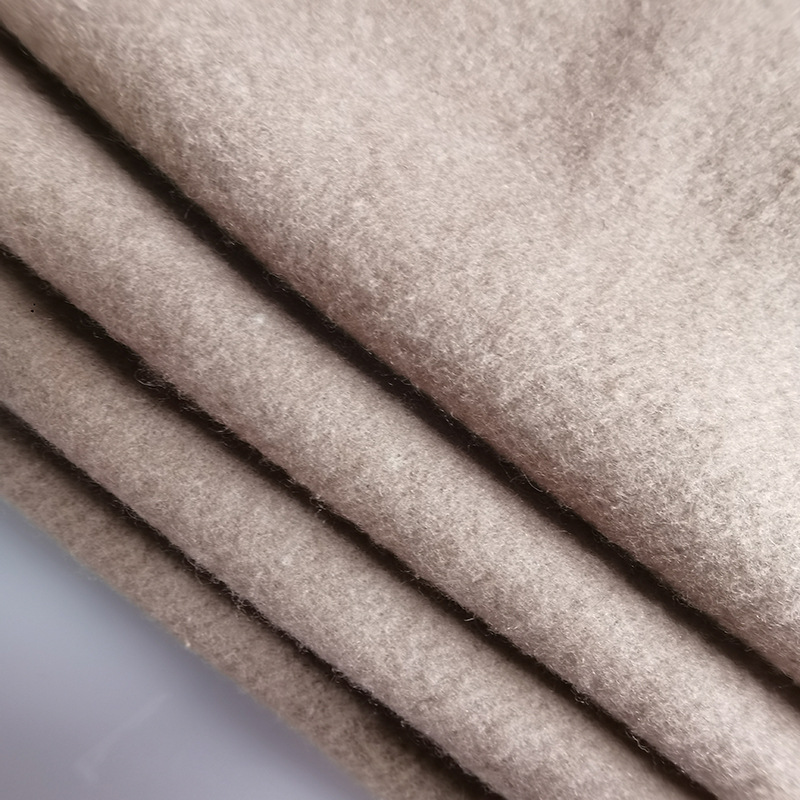
Creams, soft taupes, and layered greys remain essential for versatile capsule collections. For menswear specifically, “misty and tinted greys are a prominent color theme this season, especially for casual apparel. These subdued tones emphasize quality and enable garments to be worn across multiple seasons”. Designers appreciate that grey double faced woolen coating fabric pairs effortlessly with bold accessories, allowing customers to invest in a single coat that works across multiple outfits.
4. Statement Accents (Bright Red, Orange, Pink)
To break winter’s visual monotony, directional brands are incorporating accent colors in trims, collars, or contrast linings. These high-impact pops work especially well when applied to wool coating fabric because the material’s natural texture grounds the brightness, preventing it from feeling costume-like.
Design Silhouette Trends
Beyond color, the way double faced woolen coating fabric is cut and constructed matters enormously. For 2026, expect to see:
-
Oversized tailoring with stronger shoulders and longer hemlines—brushed and double-faced wool creates a soft, almost cloud-like finish that makes oversized proportions feel intentional rather than sloppy
-
Relaxed cocoon silhouettes that drape without bulk, leveraging the natural weight of woolen coating fabric to create sculptural volume
-
Clean, unlined constructions that put the fabric’s two faces on full display—this is the signature advantage of double faced woolen coating fabric, and designers are increasingly treating the turned-back cuff or open collar as a design feature rather than a functional necessity
-
Heritage patterns updated: Houndstooth, windowpane, and fine herringbone in oversized repeats, often presented in grey or muted earth tones for a “timeless yet contemporary feel.”
On runways, luxury houses are validating these directions. Loro Piana’s Fall/Winter 2025–2026 collection emphasizes “fluid silhouettes, immersive textures, and an earthy, nature-inspired palette” across wool coating fabric garments that prioritize warmth without sacrificing movement. Vivienne Westwood’s Winston Coat—made from 50% pre-consumer recycled wool blended with virgin wool—demonstrates how double faced woolen coating fabric can anchor a circular production strategy while maintaining Savile Row tailoring standards. For designers and buyers, this convergence of luxury aesthetics and sustainable sourcing is the clearest signal yet: double faced woolen coating fabric is not a trend. It is the new baseline.
Performance Advantages: Why Double-Faced Construction Outperforms
What distinguishes double faced woolen coating fabric from conventional wools is not merely construction—it is systematic performance superiority. Research consistently demonstrates that bifacial (double-faced) wool fabrics deliver measurably higher thermal resistance than single-faced or standard knitted alternatives.
A peer-reviewed study comparing heat transfer properties of bifacial fabrics versus conventional woven and knitted constructions found that “bifacial fabrics had lower air permeability than knitted and woven fabrics, and they were warmer to touch. The thermal resistance of the bifacial fabrics was higher than the knitted and woven fabrics”. In practical terms, lower air permeability means wind penetration is reduced without needing a separate membrane or coating. For the end consumer, this translates to a coat that feels appreciably warmer in blustery conditions—not just in still cold.
Additional research into double-face knitted insulation fabrics confirms that “thermal comfort parameters such as thermal resistance and liquid transfer can be enhanced by combining hydrophilic and hydrophobic functional yarns as double-face fabrics.” Specifically, wool/PET double-face constructions demonstrated “higher thermal resistance and air permeability values,” meaning the fabric insulates effectively while allowing moisture vapor to escape.
Why does this matter for your customers? Traditional heavy winter coats often trap moisture close to the body, leading to clamminess during indoor-outdoor transitions. Wool’s natural hydrophilic core and hydrophobic surface work together to wick moisture away from the skin. In a double faced woolen coating fabric, this property is amplified by the fabric’s dual-layer architecture, which creates a microclimate that stays warm but never suffocating.
Comparative Analysis: Double-Faced vs. Other Outerwear Fabrics
| Property | Double-Faced Wool Coating | Single-Faced Wool (Lined) | Synthetic Puffer (Nylon/Poly) |
|---|---|---|---|
| Thermal Resistance (R-value) | High (15–20% higher than single-face) | Moderate | Very High (traps air efficiently) |
| Breathability (moisture transfer) | Excellent (wool wicks naturally) | Moderate (lining often blocks transfer) | Poor to Moderate (depends on membrane) |
| Wind Resistance | High (dense weave + double-layer) | Moderate (lining provides some) | Excellent (shell fabric is sealed) |
| Lining Required | No (inner face is finished) | Yes (hides raw edges) | Usually (cold spots at seams) |
| End-of-Life Recyclability | Yes (100% wool, no adhesives) | Complex (lining materials separate) | Very Difficult (mixed synthetics) |
| Weight (grams per sq meter) | Medium-Heavy (400–600 gsm) | Medium-Heavy (similar, plus lining) | Light (but requires fill) |
| Aesthetic Surface | Two distinct finishes (smooth + brushed) | One finished surface | Uniform, technical appearance |
For garment manufacturers, the elimination of linings is a meaningful production advantage. Removing the lining step reduces assembly time, lowers material costs, and simplifies quality control. Additionally, double faced woolen coating fabric can be seamed with “special techniques that result in a clean, refined finish,” allowing the fabric’s interior face to be exposed at cuffs, collars, and plackets as an intentional design element rather than a flaw that must be hidden.
What about durability? Research on wool pile jackets from the U.S. Army’s Climatic Research Laboratory found that double-faced wool construction showed superior dimensional stability after laundering compared to single-faced wool. Specifically, “the double-faced wool pile was a shade better than the single-faced wool pile. The thickness of the double-faced pile was slightly greater, and the matting and felting after laundering was slightly less”. While this study examined pile fabrics rather than coatings, the underlying principle holds: a balanced double-face construction distributes mechanical stresses more evenly, reducing surface degradation over time.
Sustainable Sourcing & Manufacturing Innovations
Sustainability is no longer a differentiator—it is a requirement. When customers ask about your double faced woolen coating fabric, be prepared to answer: Where does the wool come from? Is it recycled? What about the dyeing process?
According to Italtex’s menswear trend forecast for Autumn/Winter 2025–2026, “recycled and sustainable wool” is a dominant theme. There is “a strong focus on recycled wool in various fabric constructions, including light knits and textured stripes blended with nylon.” Additionally, “undyed virgin wool in various natural shades is also a key trend, particularly for its authenticity and sustainability credentials”.
For double faced woolen coating fabric specifically, several production innovations are worth noting:
-
Optim™ processing produces double-faced pure wool fabrics where one side is smooth and dense (for weather protection) while the other is brushed and lofty (for comfort). This process eliminates the need for synthetic binders or adhesives, resulting in a fabric that is “woven and so eliminates the need for any synthetics, glue, membrane or lining”.
-
Pre- and post-consumer recycled wool blends are increasingly available. Some mills now produce double faced woolen coating fabric composed of “25–30% responsibly sourced fibers,” including recycled pre- and post-consumer wool and cashmere, blended with virgin fibers for strength.
-
Low-impact dyeing and water-saving finishing processes are becoming standard in premium supply chains. While not all wool coating fabric suppliers have adopted these methods, the ones that have can offer verified certifications (GOTS, Oeko-Tex, ZDHC) that resonate with eco-conscious buyers.
What does this mean for you as a buyer? Ask suppliers for transparency on fiber sourcing, dye chemistry, and water usage. The double faced woolen coating fabric that commands premium pricing in 2026 will be the fabric with a verifiable sustainability story—not just a good hand feel.
Supply Chain Considerations
China remains the world’s largest textile manufacturing base, accounting for a significant share of global coating fabric production. For double faced woolen coating fabric specifically, production hubs in Jiangsu, Zhejiang, and Shandong provinces have developed specialized weaving and finishing capabilities that rival European mills at competitive price points. The challenge is quality control: because double faced woolen coating fabric requires precise tension management during weaving and careful control of finishing chemistry to avoid surface distortion, working with an experienced supplier is essential.
For buyers sourcing from Asia, look for suppliers who can provide:
-
Third-party test reports for colorfastness, shrinkage, and abrasion resistance
-
Clear documentation of fiber composition and recycled content
-
Sample yardage for prototype testing before bulk orders
-
Minimum order quantities that align with your production scale
The double faced woolen coating fabric market is expected to grow in tandem with the broader coated fabrics industry, which is projected to expand at a 4–5% CAGR through 2035. For designers and brands, the message is clear: secure your supply chain early, develop distinctive colorways, and market the sustainable, performance-driven story that double faced woolen coating fabric enables.
Application Scenarios & Use Cases
1. Luxury Women’s Outerwear (Full-Length & Cropped Coats)
The most obvious application. Double faced woolen coating fabric allows designers to create substantial-looking coats that actually weigh less than traditional lined wools. Brands like Boggi Milano are blending fine wools with technical fabrics “to offer comfort, performance, and a modern appeal” in their Wool Tech range. For evening wear, couture details like hand-applied rhinestones on dark grey double faced woolen coating fabric elevate a simple silhouette into a statement piece.
2. Menswear Tailoring (Blazers & Jackets)
Men’s outerwear is increasingly adopting double faced woolen coating fabric for its clean finish and unlined construction. Blazers made from this fabric can be worn without an additional lining layer, reducing bulk while maintaining a structured shoulder. The fabric’s natural wrinkle resistance—a property enhanced by the double-face construction—makes it practical for travel and daily wear.
3. Sustainable Fashion Collections
For brands with circular economy commitments, double faced woolen coating fabric is nearly ideal. As Vivienne Westwood demonstrated with their recycled wool Winston Coat, this fabric can integrate “pre-consumer materials—the scraps and leftovers of fabric at the end of the manufacturing process—were collected and reprocessed” into new yarn. The resulting garment is not only luxurious but also demonstrably lower-impact.
4. Outdoor & Heritage-Inspired Garments
The heritage trend continues to grow. “One of the defining characteristics of vintage women’s coats this season is the dominance of heritage fabrics,” with wool coating fabric being central to this aesthetic. Tartan, houndstooth, and oversized herringbone patterns on double faced woolen coating fabric appeal to consumers seeking timeless pieces with authentic materiality.
5. Accessories (Capes, Scarves, Hats)
Beyond full garments, double faced woolen coating fabric is being used for capes and wrap coats where drape and movement matter. “Heavily draped wool and cashmere blends that move beautifully” create sculptural effects that lighter fabrics cannot achieve. Scarves made from this fabric offer two distinct textures—one smooth, one brushed—making them versatile for both formal and casual styling.
FAQ
1. What makes double faced woolen coating fabric different from regular wool?
Regular wool typically has only one finished side and requires a lining. In contrast, double faced woolen coating fabric has two finished surfaces, woven or knitted together, providing two distinct textures while eliminating the need for additional linings.
2. Is it warmer than single-faced wool?
Yes. Studies show that double-faced constructions offer higher thermal resistance and lower air permeability compared with single-faced or standard knitted fabrics. This means garments retain more heat and resist wind more effectively.
3. Can it be made from recycled wool?
Absolutely. Many mills now produce blends containing 25–50% pre- or post-consumer recycled wool. Always ask suppliers for certified documentation to verify the recycled content.
4. How should garments made from this fabric be cared for?
Dry cleaning is recommended. Avoid frequent washing and spot clean when possible. The dense construction resists stains, but professional care helps maintain the fabric’s surface finish and longevity.
5. What colors are trending for next winter?
Deep earthy tones such as camel, brown, and olive remain popular, along with jewel hues like emerald and sapphire. Warm neutrals (cream, taupe, grey) and statement accents (red, pink) are also trending. Pantone’s 2025–2026 London Fashion Week palette offers authoritative guidance.
Conclusion
Double faced woolen coating fabric isn’t just a material—it’s a game-changer for designers and brands planning their 2026–2027 winter collections. From superior warmth and unlined designs to sustainable sourcing and rich color options, this fabric delivers exactly what today’s conscious consumers want.
The market is growing fast, and customer expectations are higher than ever. Brands that act now to source premium wool will define next winter’s outerwear trends.
Don’t wait—contact our team to request samples, discuss custom colors, or schedule a fabric consultation. Whether you’re producing a small capsule collection or a large-volume line, we’ll help you create garments that look stunning, perform flawlessly, and sell decisively. Let’s bring your winter collection to life today.